Streams in the Desert
This sermon was preached by Pastor Ted Carnahan for the Fifth Sunday of Lent, April 6, 2025.
Transcript
Grace, mercy, and peace be with all of you from God our Father and from our Lord and Savior Jesus Christ. Amen.
The Exodus and God's Mighty Hand
I want to start our reflections today by thinking about what's being described for us in Isaiah chapter 43. In Isaiah, the reading is talking about this Lord God who makes a way in the sea, a path in the mighty waters. It's a picture of the exodus, a picture of God's mighty hand reaching out and smiting the Egyptian army, opening the Red Sea and allowing the people of Israel through on dry ground. But when the soldiers of Pharaoh believe that they can follow the Israelites on the path which God has opened to them, God smashes it shut and destroys Pharaoh and his army.
Now, just as looking back, the people of Israel are called to remember the way in which God has brought dry land in the midst of the Red Sea, in the midst of the ocean. And it is that he will take dry ground and cover it with water, not to annihilate the Egyptians, but once again to save his people. Isaiah is prophesying God's word to us and telling us that God is going to do something remarkable. He's going to bring streams of water in the desert.
The Bleakness of the Desert
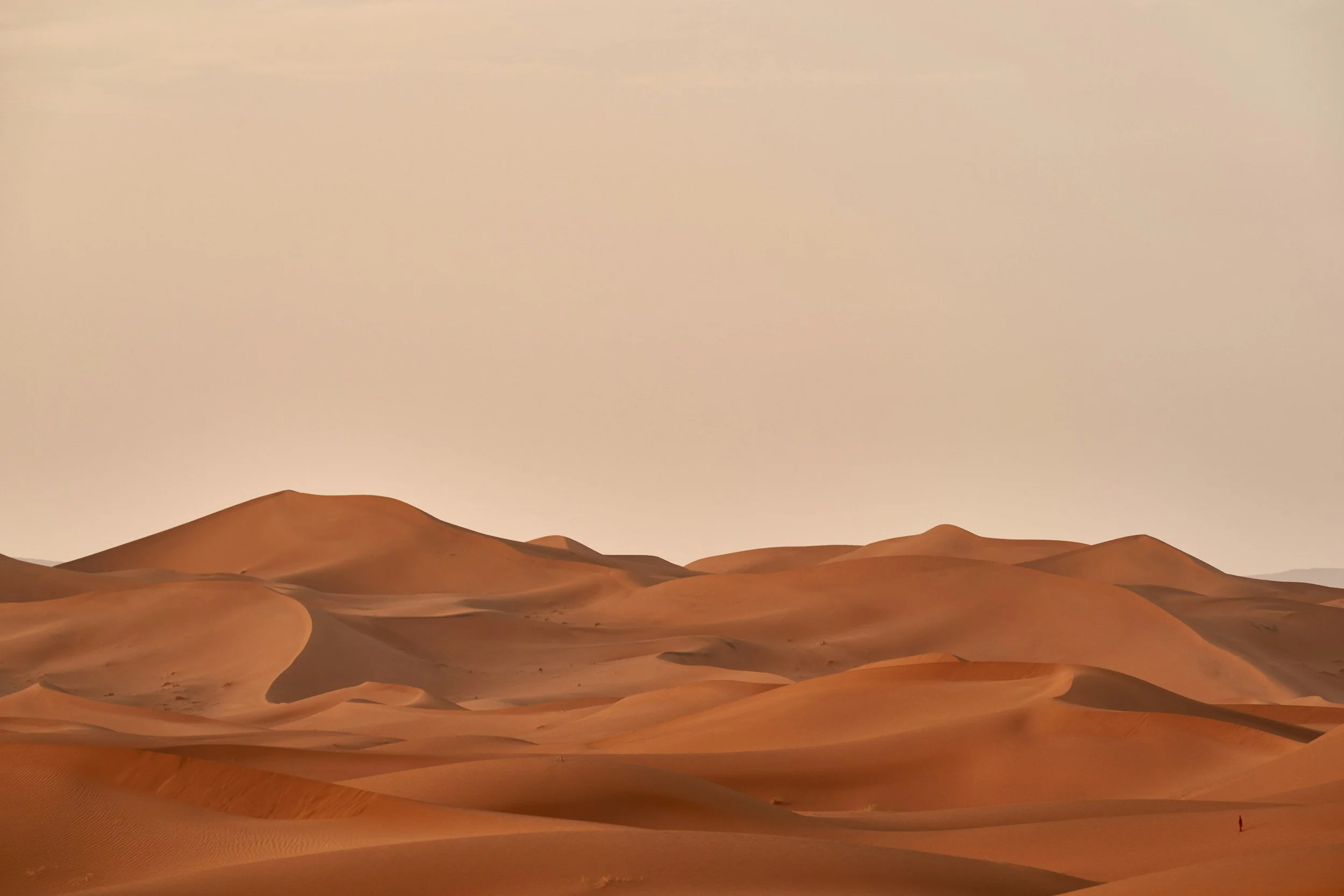
I had the opportunity as a seminary student to visit the Holy Land. I got to spend almost three weeks there, and it was a wonderful experience. The desert is not a desert like we think of sometimes if we go to the southwest where we see, well, okay, it's a little dirt and sand. It's kind of scrabbly, but you've got brush and you've got cactuses and stuff like that. This is a much more bleak desert than usually we are used to in this country. It's not completely bereft of any vegetation, but it is very, very bleak. It is very, very dried up. It is very sandy. It is very dry and lifeless.
Now, we know through modern science that the desert is not a lifeless place. Actually, just hiding beneath the surface is a remarkable variety of organisms that live in that incredibly difficult environment. But for you and me, if we go out wandering in the wilderness, we will very quickly, probably within about three days, die. And then during the day, at nighttime, the desert gets very cold. Temperature swings of 50 or 60 degrees were pretty common.
So we would be out visiting a place out in the desert like the fortress at Masada. And as we were there, it's quite warm, even though we were visiting in January. But then at night, we would need a coat because the temperatures that were in the 70s and 80s would plunge down into the 30s or even the 20s. In other words, springtime in Minnesota. And this dry desert place stretched on for miles in every direction. There was no reasonable chance that, aside from maybe knowing some survival skills like the people of the desert know even today, the Bedouin people, that there was much chance of surviving. Because even if you could survive the extremes of heat and cold, the thing that is most absent, by definition, from a desert, of course, is water. And water, of course, is the substance of life. A human being can go weeks without eating. I could probably go months. But a human being cannot go more than about three days without drinking water, or they will dry up and die.
Water in the Desert
Now God says, "I am doing a new thing. I have rescued my people out of Egypt, out of slavery, out of the hand of Pharaoh by leading them on dry ground through the water that was a threat to them because it was a barrier to their escape. And I used it instead to save my people and to crush my enemies. And now I'm going to do the same kind of thing in reverse. Now I'm going to save my people and crush my enemies, but I'm going to do so not by making a dry place where there's water, but bringing water where there was nothing but dust and sand. I will give drink to my chosen people, the people whom I formed for myself so that they might declare my praise."
One of the things you see as you travel in the wilderness and in the desert place in the Middle East is you see a lot of what they call wadis. We don't have a lot of wadis here. Once in a while you'll see them, and that's not the term that we use for them. Usually we just call them a dry crick, at least where I'm from. You know, it's not a creek, by the way. It's a crick. The wadi is a dried up riverbed because when all that water falls from the heavens and rains on the desert, as it does a couple of times a year, that water all has to go someplace. And what isn't immediately absorbed into the sandy soil runs off in great temporary rivers.
This is the picture that Isaiah is showing us from the Lord. This picture of the rains opening up and the parched ground which is lifeless and dead is crying out for water and God provides it with such abundance from the sky that it overflows its banks and the wadis run with temporary rivers. The water comes and waters the whole ground. And what happens in the desert when the waters come is all of the latent life that was hiding beneath the surface springs up. They don't have much time, so they've learned to be very quick. When the water comes, it's time for them to grow and bloom and sprout and do all the things they need to do for their life cycle because they know that the time is short, that the water won't last long. And so they spring up and the desert, which once looked gray and dead and lifeless, covered in the brown sand and the dying soil, instead becomes a mattress of green and beauty. The Lord gives His water from the heavens and the desert springs forth.
This is the image that God is giving us through Isaiah. He's saying that the desert will bring forth vegetation, that the world will be remade, that that which was parched and dry will be filled with heavenly blessing and grace.
The Thirst for God's Presence
Yet in this world, you and I, as we experience the challenges of life, we sometimes feel as if our walk through the desert is endless. We feel as if there is no water for those of us who are parched and crying out with a dry throat for the help that we need from God. King David knew of that thirst for God's presence. In Psalm 126, he says, "Restore our fortunes, O Lord, like the watercourses in the Negev." He's talking about these watercourses in the desert, the Negev desert. And what he's saying is, "life-giving rain."
But something that I noticed that he said that I think is quite remarkable, in the last verse of the psalm today, the last two verses, he says, "May those who sow in tears reap with shouts of joy." To sow, we're talking about planting seeds. And he's saying, "May those who sow in tears, who bury their hopes and their dreams in the soil of dying, who know their sin and how far they are from God, who go out, as he says, weeping, bearing the seed for sowing, are given a promise." Because God comes with this promise here. He says, "If you go out with seeds of weeping, if you go out with your sadness and your hurt and your pain, you go out with the burdens that you carry on your shoulders and weeping, the parched and dead ground, God will come and give His rain a blessing and you shall come home, he says, with shouts of joy, carrying your sheaves, carrying giant bundles of grain." The outcome of your suffering and your hope in God is an abundant harvest brought by the rains.
And so we don't place our confidence in this world or in ourselves because the confidence that we place in ourselves is confidence which is misplaced. Putting our confidence in the dead ground itself without the water of the rains of God to water it is an exercise in futility. Go plant some seeds at the wrong time in the desert. Tell me how good your corn crop is when you plant it in sand and never water it. But God promises that those who sow will have confidence in something more than themselves.
Paul's Confidence in Christ
Paul understood this. He talked about this in Philippians today. He says, "If anybody else has reason to be confident in the flesh, I have more." And he goes through a long list:
- Circumcised on the eighth day.
- A member of the people of Israel of the tribe of Benjamin.
- A Hebrew of Hebrews. I am one of God's chosen people. I can cling to that. That has a promise attached to it.
- He says, "I'm a Pharisee as to the law, as to the persecution of the church." Remember, Paul used to be called Saul and he persecuted and imprisoned and tortured and killed Christians.
- He says, "As to zeal, I'm a persecutor of the church. As to righteousness under the law, following all of the laws that God has given His people. Blameless. I've done all the good stuff."
If anybody has reason to trust in himself, St. Paul has more. Yet he tells us, "Whatever gains I had, those I have come to regard as loss because of Christ. More than that, I regard everything as loss because of the surpassing value of knowing Christ Jesus my Lord. I have suffered the loss of all things, and I regard them as rubbish, as filthy rags, in order that I might gain Christ and be found in Him."
Compared to all of His righteousness, all of His benefits, all of His accomplishments, compared to all of the accolades, all of the study, all of the knowledge that He had accumulated, all of His scrupulous keeping of the law and trying so hard to make the love of God by His own effort, St. Paul understood and we should understand that we are nothing but a parched and dry desert, having no life in ourselves. But what God has given us is His peace and His love through holy baptism. He has sent the water which comes to us from above. This water which is not just a washing of the pool but is the word of God and a holy baptism for us. This water which pours onto the dead dry soul of our lives and makes us spring up as new creation, bringing life out of death. We who are in Christ and baptized into Him have been given life. And this life comes not from our own action or good but from what God has done for us, pouring out His love onto the parched deserts of our soul so that we might spring up with vegetation and growth.
The Resurrection of Lazarus
Consider for a moment the scene at the Gospel lesson today. As Lazarus is hosting a meal, it's an odd place to be having a meal. And we're told right up front in John 12, "Six days before the Passover, John is telling us the Passover is coming. Thursday night is the start of the Passover, and they're going to have the last supper. And Jesus has come to Bethany. And there at Bethany He is staying at the home of Lazarus. That would be a normal thing for Him. He probably ate at the home of Lazarus many times. We know that Jesus visited Lazarus and Mary and Martha because we have stories of Him visiting at other times and other things happening there. But this is different because Lazarus here is described by John as the one whom Jesus had raised from the dead. Lazarus was not supposed to be there. Lazarus was supposed to be in a tomb.
And yet, when Jesus came to Bethany, to the tomb where Lazarus, who had died of a terrible illness, He ordered for the tomb, which He had already been dead for several days, to be opened. And they said, "Jesus, don't do that. It is already going to be a smell." And Jesus spoke with authority and said, "Lazarus, come out!" And the Word of God creates the reality it declares. And Jesus says, "Come out of your tomb." And even a dead body that has no life in it, for which there is already a smell, wrapped up, looking like a mummy, wrapped in burial cloth, wrapped up in white linen, and anointed for His death, when that dead, lifeless body hears the Word of God spoken, Jesus, the Word in flesh, says, "Lazarus, get up!" And that dead body hears the voice of its Lord and rises, not because He had the power to live in and of Himself, but because His life was commanded forth by the Word of God.
And so, they have a dinner there. Martha serves. Lazarus is there at the table. What an unusual gathering. And Mary comes and takes an enormous quantity of expensive perfume and pours it on Jesus' feet. Can you imagine the reek of it? Have you ever been in church and you're sitting behind somebody who's forgotten that they put on perfume 14 times, so they put it on a 15th time just to be sure? I've been there. Not saying it's happened here. No, ladies, yours is perfect. I'm talking about somebody else. No, can you imagine the reek of it? You'd have to open the windows. Heck, I'd be diving for the exit with that much perfume. A pound. And this stuff would have been compounded as sort of a lotion, kind of a waxy oil, maybe more like Vaseline. But still, mixed in, that much nard would have stunk. It would have smelled like death because that's what was customarily used in order to anoint the dead.
But here comes Mary. And Mary pours this out on His feet for His death because she recognizes something remarkable. Here, Lazarus is going to die. Mary's going to die. Martha's going to die. But the first one who's going to die is Jesus. And when He dies, He will be that seed which goes into the ground and then rises up in new life. He will be the water falling from the sky to give life to the dead in the desert. He will be the one who brings life in the midst of death because she's seen it with her own eyes. She watched it happen. And Lazarus, who's sitting right there, is tangible living proof of it. So she doesn't care about how much it costs. She doesn't care about the objections of Judas Iscariot, who will later betray Him. All she cares about is showing the world what her Lord is doing, and will continue to do.
People of God, the rain is falling upon you, and it is the mercy of God. It is for you when you are dry and parched and dead. This water has fallen on you in your holy baptism, making you a child of God, making you bear fruit which avails much, that changes the world because it changes your heart. Trust in the mercy of the God who brings rivers in the desert, who remembers His people. And may the peace of God which surpasses all understanding keep your hearts and minds strong in Christ Jesus our Lord to life everlasting. Amen.