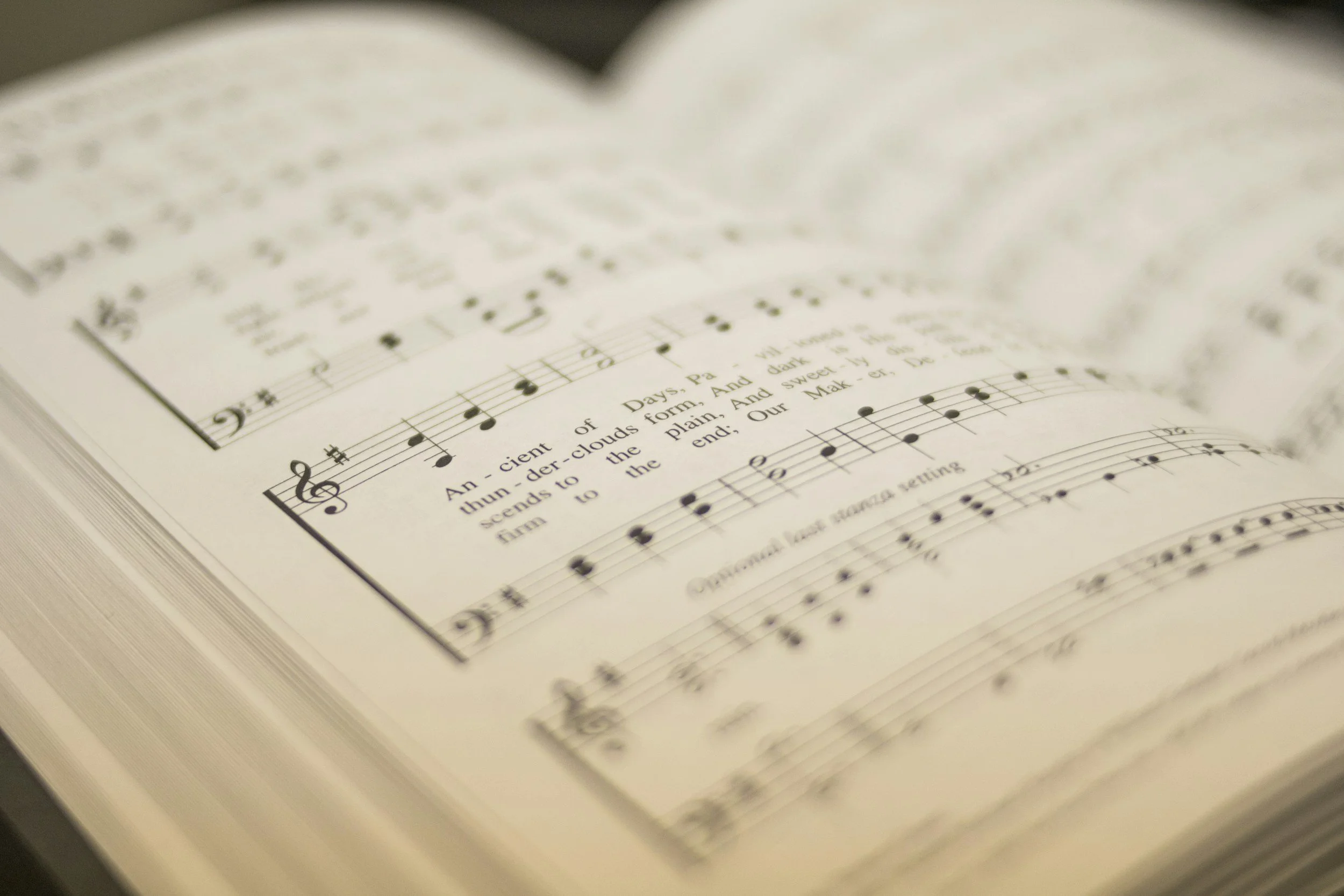
Why do we chant the liturgy?
A visitor to our church recently asked me this question after experiencing worship at Our Savior’s for the first time. In his home church, there was not so much singing. He was especially interested in the practice of chanting in worship. It’s a very good question!
About Chant, or ‘Plainsong’
In the first 300 years of Lutheranism, we developed the well-earned reputation of being the “singing church.” But the tradition of chanting is far more ancient than that. “Plainsong” chanting has its origin in the early church in the first centuries of Christianity. It is influenced both by the practices of Jewish synagogues and the Greek ‘modal’ musical system.
The liturgical texts of the early church, originally composed in Latin and/or drawn directly from the Scriptures, are still in use today in our worship. Therefore, most of the liturgy that we sing is hundreds or thousands of years old. While most of the liturgical melodies we sing are only a few hundred years old at most, when we sing the Great Thanksgiving “The Lord be with you / And also with you…” before Holy Communion we are using a chant tone that dates back as early as the synagogues of the second century!
During the Lutheran Reformation, our principle of worship has been to preserve tradition handed down by the Church and only to set aside worship practices that do not align with the Scriptures. Like many things in the Lutheran Church, chanting belongs to our tradition, and it is not a requirement.
As we move through the church’s annual liturgical calendar, we vary our worship practice to keep worship fresh while still using the time-tested traditions that draw us more deeply into the Scriptures. This includes changing the “setting” of the service to different musical versions of the same pattern and texts of worship.
Why sing today?
Singing Connects Us with God
Ephesians 5:18b-20 — …but be filled with the Spirit, as you sing psalms and hymns and spiritual songs among yourselves, singing and making melody to the Lord in your hearts, giving thanks to God the Father at all times and for everything in the name of our Lord Jesus Christ.
"He who sings prays twice." ~ attributed to St. Augustine (AD 354-430)
Psalm 100:2 — Worship the Lord with gladness; come into his presence with singing.
Scripture tells us that we are to be filled with the Holy Spirit, and one way we connect with Him is by singing from the Book of Psalms, our hymns, and spiritual songs. This fills us with gratitude towards God and faith in Jesus Christ.
Singing Applies Scripture in our Worship
Most of the repeating texts of the liturgy, (e.g. the Kyrie (In peace let us pray to the Lord…), the Gloria (Glory to God in the Highest or This is the Feast), are direct quotes or paraphrases of the Scriptures. Nearly everything we say and do in worship comes straight from the text of the Bible. Since the purpose of worship is, first, to apply God’s Word to the people, we believe the best way to do this is by speaking and singing the Scriptures.
Singing Connects Us to Each Other
Singing together builds a sense of fellowship and unity. It creates a shared experience that binds the church community, as we collectively lift our voices in worship.
The Bottom Line
Music, more than anything else we do in worship except the Scripture itself, shapes what we believe. It’s important to get it right. The Great Tradition of the Church, including the practice of chanting, helps the Holy Spirit’s work of impressing upon us the Sacred Scriptures and forming us as disciples.