Come and See
This sermon was preached by Pastor Ted Carnahan for the Second Sunday after Epiphany on Saturday, January 17, 2026.
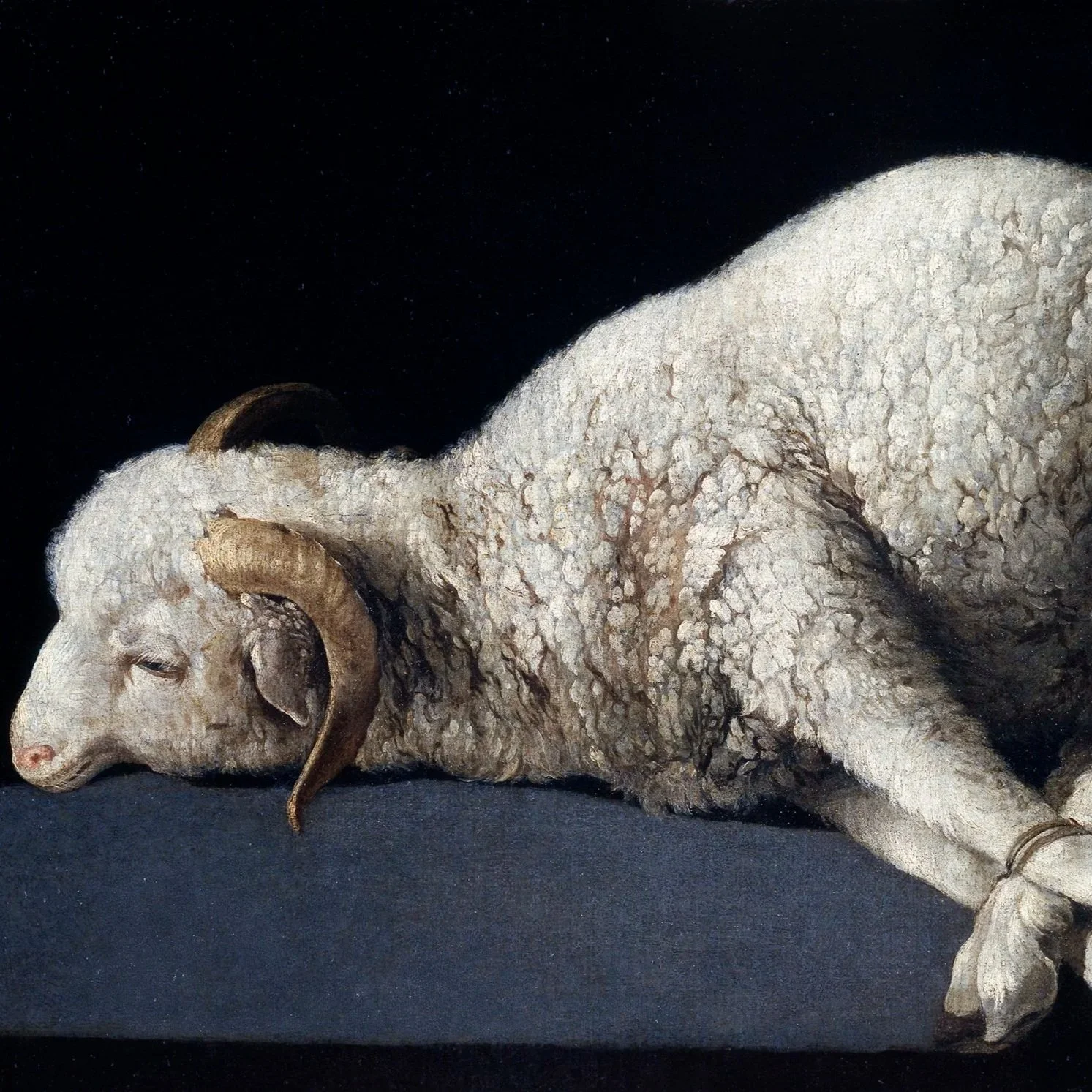
Look, here is the Lamb of God!
Grace, mercy, and peace be with all of you from God our Father and from our Lord and Savior Jesus Christ. Amen.
I alluded to this a little bit last week because we follow a predictable progression in our readings and stories from the Bible as we move through the church year.
Here we have the testimony of St. John the Baptist: "Here is the Lamb of God who takes away the sin of the world."
God testified to him. His word came to John and said, "The one on whom you see the Spirit descend and remain is the one who baptizes with the Holy Spirit."
And then John says, "I myself have seen and have testified that this is the Son of God."
This is the gift of God: that we are united to his family in Holy Baptism. And yet it's so common, almost cliché, that we go on journeys to find ourselves, perhaps going on trips.
- We go through the wilderness of maybe spending time away from church.
- We spend lots of time trying to decide who we really are. As I mentioned last week, we talk about our own identity in pretty much anything we can get our hands on except the word of God.
- We make ourselves into the image of whatever we see on TV or the movies or on social media nowadays.
- And we seek after things which ultimately cannot satisfy us.
And to this, then, we have our text today. John knows who he is. John the Baptizer knows what his purpose is. He is single-mindedly focused on it. And in focusing on his responsibility, his duty, his calling, his vocation to be a forerunner of Jesus Christ, he is fearless in proclaiming the Truth, even to people who eventually will use their power to lop off his head.
That fearlessness is something that I think too often we find ourselves without now. We are more commonly willing to go with the flow, to not stir the pot. We have lots of ways of talking about that attitude of not upsetting the people around us. But here, we have a bold example in John the Baptizer of one who comes to tell the truth, the whole truth, and nothing but the truth, so help him God.
Jesus' Question to the Disciples
And in testifying "Look, here is the Lamb of God," he gets the attention of two men, one of whom was a follower of John by the name of Andrew, (St. Andrew). And Andrew, a fisherman, then brings in his brother, Simon, who eventually gets the nickname from Jesus, Peter.
Jesus asks Simon, or not Simon, rather Andrew, a question. And that question is not just limited to asking of Andrew, and it's not just limited to asking of people in that day. Indeed, I think it's a question that belongs to you and to me, and a question that we must answer in the presence of God.
Jesus says, "What are you looking for?"
What are you looking for out of life? What is it that you seek? What is your quest? What's your purpose? What is it that you're looking for?
Responding to the Call
You see, the two disciples hear him say this, and they follow Jesus. And Jesus immediately turns around and asks them, "Why are you following me now?"
What is it about what John said? "Look, here is the Lamb of God who takes away the sin of the world."
And now, here are these two men who say, "That's the Lamb of God who takes away the sin of the world. I'm in. I'm going to follow that guy."
But then Jesus turns around, looks them square in the eyes, and says, "What are you looking for?" That's a question we don't address very often, is it?
Because what are we looking for? I think many of us have the sense of having an open spot in our hearts that we feel is in need of filling up with something, but we don't really know what to do with it. And it's actually kind of hard for us even to name that reality and to wrestle with the truth that there feels like there is something missing in our hearts. It's hard for us to come to terms with the idea that there might be something lacking in what we have.
Or maybe, on the other hand, you're one of those who knows acutely and deeply that there is something missing, and maybe you don't know exactly what it is, but you know that whatever it is, it's important, and you've been missing it. Maybe you've been missing it for a long time.
Ordinary Men
And Jesus asks them, "What are you looking for?" In a classic case of reversing the roles, turning the tables, instead of Jesus refusing to answer a question and instead posing another one, here it is John's followers (his new disciples) who turn the tables on him.
Jesus asked, "What are you looking for?" And they reply, "Rabbi, where are you staying?" And as they answer that question, I'm not sure that they know everything that they're getting themselves into.
These are ordinary men, fishermen. It's what they do. It's all they know. They probably have next to no, if not any, formal education whatsoever. They may not have been able to read and write. Probably not, actually.
They were not going to be eloquent men. They grew up among rough people, and they learned rough manners, and they just did what they had to do to get by. They're very ordinary.
And yet, there's something about this Jesus who strikes them as something that is filling a hole in their hearts, and they don't even know what it is exactly that they're missing, but something about this Jesus has that thing, has that something that is the answer to the question that Jesus has asked, "What are you looking for?"
And so rather than spending a whole life full of regret, or grasping at what little tiny bit of stability and security they might find in the world through fishing and selling the fish, and hopefully having enough to make a life, instead, they ask, "Rabbi, where are you staying?"
Not just "where are you now, I can see that," but "where are you going? Because wherever it is that you're going next, Jesus, that's where I'm going to." And Jesus replied and said, "Come and see."
My Own "Come and See" Story
Those three words that Jesus replies to his disciples might be the three most important words that I've ever had somebody speak to me personally, in terms of setting a direction for my life.
When I was trying to discern whether to go to seminary or not, I was acutely impressed with the reality that it cannot be something that just comes out of my own heart. Lutherans are very clear on vocation and that a calling to the pastoral ministry is not just a matter of your inner drive, motivation, or calling. It has to be something which is recognized by the church and fostered by the church.
And so because of that, I was very concerned that I didn't want to start on a seminary journey heading towards ordained ministry unless I was absolutely certain that I had everything figured out and that it really was God who was calling me, and that need to go do that was really the Holy Spirit working in my life and not just the terrible aftermath of last week's bologna sandwich.
And so I started visiting seminaries. I actually only visited two. I visited Luther Seminary up in the Cities. And it wasn't the experience that I needed it to be. It wasn't going to be a good fit for me.
But when I went up there, they had a professor who spoke at length about what it meant to be called and did so through the lens. He was an Old Testament professor, professor of Bible, and he was talking about the call of Moses and how that call was recognized and how he responded to that call.
And I kept just thinking through the whole time, "I am not that guy. I am not Moses. I don't have the surety of a burning bush in front of me. I just have this feeling in the pit of my stomach that something about the life I'm living now, I'm supposed to set aside and go do this other thing. I don't know what to do."
And so I asked the blunt question in front of that whole class full of people who were a lot more pious looking than I was. You know, they're all sitting there in their desks listening very intently to the professor. I raised my hand and I say, "Professor, how do I know that I'm really being called by God and I'm not just feeling the after effects of a bad bologna sandwich?" I asked that question. And everybody kind of laughed and was like, "Well, this guy isn't going to cut it."
I think he tried. He spoke for about five minutes. And never have I heard a man say so many words and say so little in actual meaning.
I was so discouraged coming away from it thinking, "Maybe if I just don't get it, I don't get it. Maybe this isn't for me. Maybe this thing that I thought I was looking for that I thought I was called to, then maybe this isn't the direction I'm supposed to go with my life."
But fortunately, I'd already scheduled one other visit. And we went to Wartburg. And a professor who became a dear friend of mine, I asked him the exact same question. Not in front of the whole class. The opportunity wasn't there the same way it was in the first case. But I asked him directly the same question I asked the first one.
And his answer was the simple answer that Jesus gave to those who wanted to know where he was staying that night. He just said, "Come and see."
Come and see. Which, I mean, easier said than done. Giving up a lucrative career and stability and moving to a city and a state that I had spent several years making fun of, Iowa. And choosing to live in Dubuque, Iowa was a bit of a stretch.
But I did. I tried it. And it kept working. And I kept passing. And they kept letting me come back. So I did. And I found myself in Nebraska. (And I thought Iowa was flat.) And then I ended up eventually in Minnesota.
But those three words, "come and see," they were pivotal for me.
The Invitation Beyond Certainty
Because the problem that I had was that I was looking for surety. I was looking for perfect knowledge. I was looking for this, in a nutshell, condensed, easily digested, proof positive idea that this is going to work and nothing's going to go wrong.
And that is not what God had in mind. He just invited me to take the next step. To come and see. To try it. See what happens. What's the worst that can happen? I was in my twenties. If it didn't work out, I could go do something else. And so I did. And it worked out.
Too often, we try to cling to certainty. Looking for that thing in our hearts that's going to tell us, "Yes, you're on the right track. You'll never have a doubt again. Nothing is going to change that. Nothing's going to shake your sense of calling, purpose, vocation, whatever it might be."
To whatever it is. We're not just talking about professional ministry. I'm talking about the day-to-day ministries of life.
- Should you take that job?
- Should you move your family?
- Should you have another baby?
- Should you pursue this opportunity?
- Should you sell your house and buy another one?
All these questions that we want to attach meaning to and think we just have to get it right.
And the answer that Jesus gives is sometimes just Ccome and see." Trust me. And take a step. And see if it works. And if it does, trust me again and take another step and see if that works. And if that works, keep going.
The Faithfulness of Andrew and Peter
Until sometime later you discover yourself at the end of your life like St. Peter or St. Andrew in our story today, who having led a life of adventure and wonder, getting to see the death and resurrection of Christ, betraying his confidence and then being restored to community, preaching the gospel all across the known world, and then coming to the end of their lives and finding themselves in such trouble with the authorities that they're about to be executed.
And being able to boldly say in the case of Andrew, "Don't crucify me on a cross. That's the cross on which my Savior died. And I'm not worthy of such a lofty thing. Crucify me diagonally."
Or St. Peter who says, according to the legend, "Don't crucify me in the same way as my Lord Jesus. I'm not worthy of that. Crucify me upside down."
(By the way, an upside down cross, that's not a satanic thing. The church has been using that for 2,000 years.)
But it all started with "come and see." And at the end of their lives, as they came to these admittedly ignoble ends, they were martyrs and witnesses.
And they would not have said at the end of their lives, "I guess It was all for nothing." Even though they were facing the executioner, they would say, "It was worth everything. And what I have accomplished in trusting Christ has meant more than my own life."
Come and See in 2026
People of God, I bid you in 2026 to simply listen to God's voice calling you and come and see.
- Try something new.
- Be willing to change.
- Be willing to pursue God in repentance and faith.
Listen to Him say, "Come and see" and take a step and depend on Him and see if He doesn't bring you into something that may be easier, it may be harder, but it will be more faithful. And that's what really matters.
May you know the peace that comes from saying, "Wherever my Lord Jesus is staying that night, that's where I want to be too."
And may the peace of God, which surpasses all understanding, keep your hearts and minds strong in Christ Jesus, our Lord, to life everlasting. Amen.