The Cure for the Venom in your Veins
This sermon was preached by Pastor Ted Carnahan for the Second Sunday in Lent on March 1, 2026.
Grace, mercy, and peace be with all of you from God our Father and from our Lord and Savior Jesus Christ. Amen.
The dictionary defines faith as "complete trust and confidence in someone or something." I think that that's a good definition, but when we're speaking of Christian faith, I think we need to add a little bit to it.
I once got in an argument with an Episcopal priest over this. He claimed that when you walk into the room and you flip the light switch on, you're doing so because you have faith that the light will come on. I said, well, I get what you're saying, but I think that you've missed something important. Because you have every reason to believe that the light will come on. The light has come on for you a thousand times before. Faith is more than just believing that when you do X, Y will happen.
There's got to be some additional piece of it that actually makes it a kind of trust that pulls us outside of ourselves. I gave him this analogy, and he didn't like it. But I think it's good, so I'm going to let you know what it is.
The Light Switch Analogy
Imagine that there's a power outage. You walk into the room. What's the first thing you do in a dark room during a power outage? You flip the light switch anyway! Why? Because it's worked a thousand times before, so you just automatically do it. Nobody thinks about it. Even to the point where if you've ever had your house remodeled and you had a light switch moved, how many times do you hit the wall there where it used to be, expecting that that's where the light switch is?
But even that, I would say, is not faith. Here's what I would define faith is. Faith is walking into the room in the middle of a power outage, remembering that there's a power outage, knowing for certain there is no electricity going through those wires, and still firmly and faithfully walking over to the light switch and toggling it and expecting that light to come on.
As Soren Kierkegaard put it, who's a famous theologian and philosopher, faith is "faith by virtue of the absurd." It doesn't take a lot of trust when the power is on to flip the switch. It doesn't take faith to flip the switch expecting the expected to happen. Faith is saying that things are not going well, and that maybe even it's impossible for things to get better, and yet trusting that they will.
Nicodemus and Faith
I think that Nicodemus is wrestling with faith in our reading from John chapter 3 today. He appears to have faith in Jesus. In fact, I think Jesus is affirming that when he says no one can come to him this way unless he has been born from above. I think that's actually what starts the conversation.
But yet at the same time, we know that Nicodemus is torn because he comes at night. The reason he comes at night is because Nicodemus is a leader among the Jewish council of the Sanhedrin, and he acknowledges Jesus is doing things that are remarkable, miraculous. He's doing signs that are truly from God.
Nicodemus is a smart guy, and he knows his scriptures incredibly well. He probably has the first five books of what we call the Bible memorized word for word. He concludes there's no way that you could be doing the things that you're doing if God's power was not at work in you. He seems to represent a minority group within the Sanhedrin who have this understanding of who Jesus is.
But Nicodemus is afraid. He comes at night because he doesn't want other people to see as he comes to investigate. He sees that there's something at work, and he realizes that what Jesus is doing apart from God's power is impossible. Yet, it seems to be true, and he wants to know more.
Born from Above
Jesus' answer to him when he says, "No one can do the signs that you do apart from God," is enigmatic. "You must be," he says, "born from above." Or other translations of our Bible say, "You must be born again." The ambiguity there is actually intentional. Neither of them is more correct than the other. Of my two favorite Bible translations, one says one and one says the other, because it's intentionally vague what Jesus says here. It's meant to embrace both possibilities. You must be born a second time, born again, but also you must be born from above. I think that that's actually the emphasis.
Nicodemus misunderstands it, though. "You must be born from above? Well, okay, but how can I be born again? A second time? Can I enter back into my mother's womb and come out again?" Of course not! That's absurd! That's silly! To be born a second time, to be born again, seems impossible.
But Jesus explains that we must be born from above. Born of what Jesus says, water and spirit. Here, this gets misunderstood even by other Christian groups. It'll be understood as two separate births.
(Pentecostals do this, for example. They'll say that being born of water is baptism, and then being born of spirit is the "baptism of the Holy Spirit," which causes you to do weird stuff like speak in tongues.)
But that's not what Jesus is saying here. He's saying, you must be born of something that I'm going to call water-and-spirit. What is water-and-spirit? That is what Holy Baptism is. This Holy Baptism is being born again from above. So water and the Spirit are one baptism, and the Spirit comes to us by baptism. Therefore, we can confidently say, with St. Peter and all the apostles, that "Baptism now saves us. Not by a washing of dirt from the body, but as a petition to God for a clean conscience."
Now, Nicodemus is confused by this, and you would expect him to be. This is all very new to Nicodemus. But Jesus, in essence, is saying, to be born of the Spirit is not to understand how these things are true, but to know that they are still, in fact, true, whether you understand them or not.
He speaks of the wind and says, it's just like the wind, which comes and goes without us knowing where it's coming from, or where it's going. He uses the analogy of wind, again, in a dual way, because the other word for wind in Greek is spirit. The Spirit comes from where it comes and goes to where it goes, and you don't know where it's going or where it came from, but the Spirit still does his work.
Nicodemus, so overwhelmed by the duality of everything that's being said — they're having conversations on at least two different levels here — stops and says in wonder, "How can these things be?"
Jesus replies with maybe a little admonishment here: "You, O teacher of Israel, Nicodemus, grand rabbi, learned scholar, you are the teacher of Israel, and yet you do not understand this?" he says. No, he says, of course you don't. Because it's not something that comes to you by your own reason. It must be revealed to you. You will not reach this kind of wisdom by your own natural understanding. It must come by revelation.
The Bronze Serpent Story
We are human, and as humans, we need something physical to grasp, something tangible to look at, something that's concrete and not just abstract. He speaks of a story that I really like, but a lot of people don't remember from the book of Exodus, the story of Moses and the bronze serpent in the wilderness. If you don't know this story, don't feel bad about it, because it doesn't come up all that often. But I like talking about it every time I get a chance, because I think it's a fantastic example of what faith is.
If you're familiar with Moses and the Exodus, you might remember the Burning Bush, or going to Pharaoh, "Let my people go," the ten plagues, crossing the Red Sea. Maybe you remember Moses striking the rock, but you might not remember this one, because it isn't so complimentary to the people following Moses.
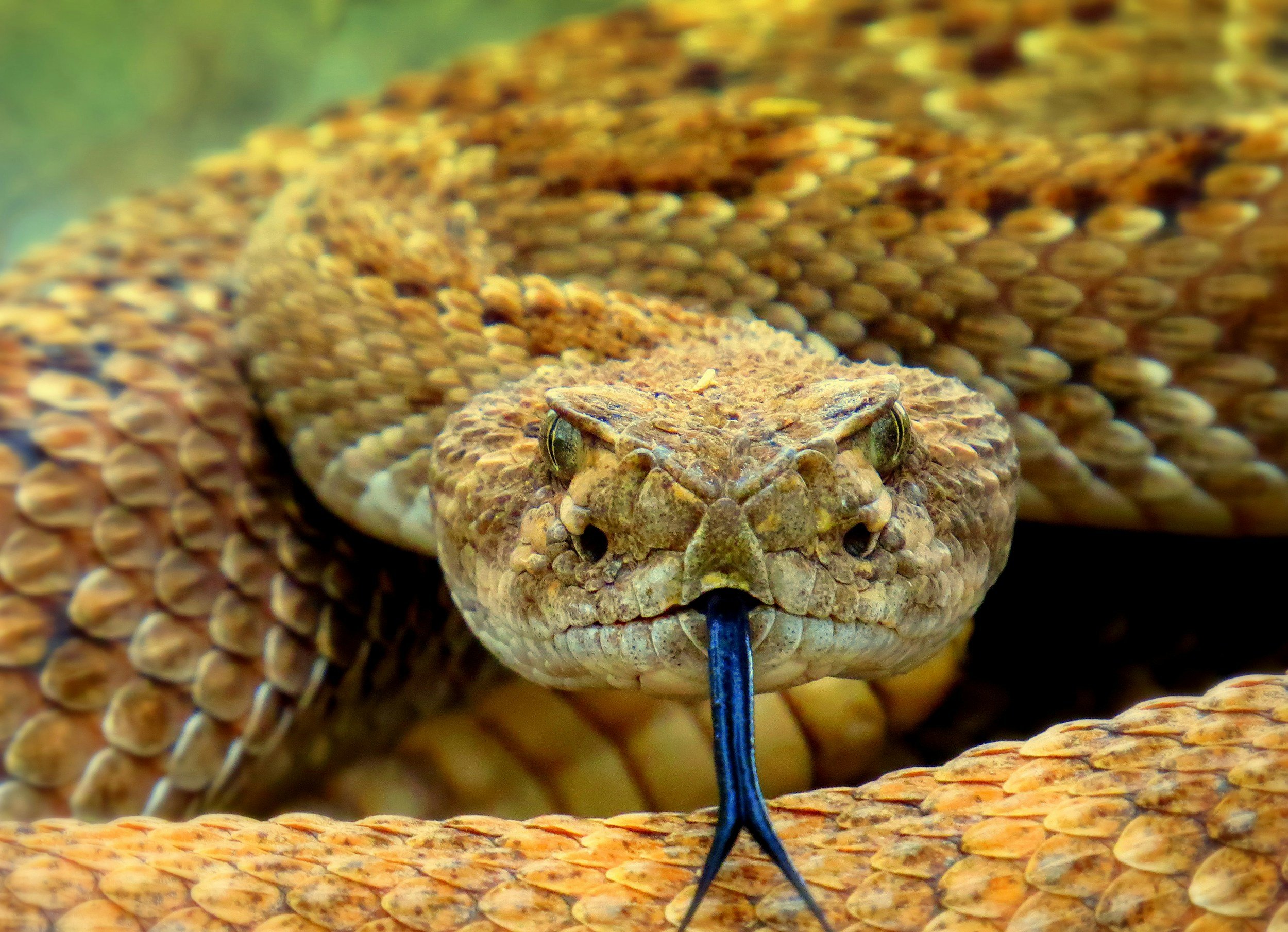
The people of Israel are in the wilderness, and they begin to complain against their leader. For their faithlessness, they are punished by God with venomous snakes sent among them. How many of you are big fans of venomous snakes? Not me.
In fact, I remember when I was following my darling wife, Jennifer, around the herpetology lab when she worked there in college, when we were dating. She would take care of things, and I would keep her company there. They had a cottonmouth snake. Do they have those in Minnesota? Okay, well, cottonmouth snakes are both incredibly aggressive, and they're also incredibly venomous. We had one in a locked cage in the herpetology lab, and its name was Beelzebub. When you would come into the lab, it would leave little rivulets of venom running down the inside of the aquarium. Charming creature! I don't envy the person who had to take care of that one.
The people of Israel are in the wilderness, and God punishes them for their faithlessness by sending venomous snakes around among them. Not just a couple. (Samuel L. Jackson would have a lot of things to say about the number of snakes on this plane!) They begin biting people. They begin dying in droves. The people are desperate for a solution. As they're dying of snakebite, they're crying out to God for mercy because of their sin.
Moses goes to God, and God has mercy and commands Moses, not just to wave his hands like a magic wand, but to make a bronze serpent and put it up on a pole or a staff. And he commands that any who look upon the serpent will be cured of their snakebite. Notice, God doesn't remove the snakes. (They earned that.) But he removes the death that comes with the bite.
The people do. They look upon the bronze serpent upon the pole, and they are saved. They're saved, not by the act of looking, not by the use of the muscles in their eyeballs to look up at the serpent, but they are saved by trusting an absurd word of promise.
God speaks to them and says, if you do what I ask you to do, if you obey me and trust me in faith, simply gazing upon this absurd bronze snake on a pole will be enough to cure you of the venom flowing through your veins. They believe the word of promise. And that faith translates into action. And they do live.
Connection to Baptism and the Cross
That's why Jesus then can say, "Just as Moses lifted up the serpent in the wilderness, so must the Son of God be lifted up." Here, Jesus now is telling Nicodemus of both of baptism and the cross.
First, he speaks of baptism because he's giving us a promise about baptism. Baptism rescues you from sin. It allows you to be born from above. It gives you God's Holy Spirit. "You must be born of water-and-spirit," Jesus says. To be born by water and spirit, you must believe what the word of God says, and then this ordinary water becomes for you a healing bath. It makes you God's own child.
If you hear that, and you have Christian faith, that when you hear that in this holy baptism, this ordinary water united with God's word, becomes for you holy baptism, then you will earnestly desire to be baptized. If you believe that about the baptism that you have received, then when the evil one threatens your faith, you can rebuke the devil with something concrete and not say, "Evil one, I'm rejecting you because you have bad vibes or because I have some idea in my head in some abstract way."
But: "You serpent, your snake bite means nothing to me. The venom in my veins is cured by the blood of Jesus Christ! I am washed free from my sin on account of him, and I know it for a fact because I received a sign and seal of his promise. I have been made clean in the waters of Holy Baptism. No, you devil, I've been snatched out of your jaws by my Lord Jesus Christ in baptism, and I am his child now, and you have no power over me!"
So he's given us a promise about baptism, but also a promise about his coming cross. Jesus is showing us the power of faith in connection with his death and his resurrection. Because it's not merely enough to believe with head knowledge that Jesus Christ lived and died on a Roman cross. Demons believe that Jesus lived and died on a Roman cross!
In fact, it's not even enough to believe that Jesus rose from the dead. Because all the demons know that too! They know that Jesus rose from the dead. They don't like it, but they know it. Your head knowledge is not what makes you a Christian.
If you have true Christian faith, then when you see the death of Jesus on the cross, when you see him rise from the dead, when you see him ascend into heaven, when you see him send his gifts at Pentecost, you can say that those things that Jesus Christ did, even though it's absurd, even though these things don't happen to ordinary people like you and me, we can say, yes, these things are done for me. That you are saved by Jesus Christ's cross: For you, for the forgiveness of your sins.
Just like the serpent on the bronze pole. It wasn't the act of looking at the snake that saved them from the venom. It was the trust in the word of promise given for you.
Followers, not fans
Jesus is not just looking for fans who have memorized John 3:16. It's not lost on me that that was part of our reading today. "For God so loved the world, that he gave his only Son, that whosoever believeth in him may not perish, but have eternal life." It's easy to memorize that, harder to hear the word of God and trust it.
To walk into a room that has been darkened by sin and knowing that there's no power in yourself, and yet flip the light switch and trust that God will light your life. But God calls you to turn to him and live. And like the bronze serpent on the pole, your Lord Jesus Christ was lifted up so that whosever believes in him may have eternal life. So, people of God, look upon him, for he hung upon the cross for you. He bleeds for you and dies for you and rises from the dead for you, that you may live forever — sins forgiven, in perfect communion with God.
May you know the peace of that certainty. May the peace of God, which surpasses all understanding, keep your hearts and minds strong in Christ Jesus our Lord to life everlasting. Amen.