Can These Bones Live?
This sermon was preached by Pastor Ted Carnahan for the Fifth Sunday of Lent on March 22, 2026.
Grace, mercy, and peace be with all of you from God our Father and from our Lord and Savior Jesus Christ. Amen.
Mortal, these bones are the whole house of Israel. They say, "Our bones are dried up and our hope is lost. We are cut off completely."
I don't know about you, but for me, that's what I'm feeling this weekend. My bones are dried up and I'm dead. My hope is lost and I am cut off.
But the question that I'd like you to ask is the same question that the prophet Ezekiel asks at the beginning of this vision in Ezekiel 37. It's the question God asks of Ezekiel. He says, "Mortal, can these bones live?"
He's pointing out over a valley of dry bones — the remnants of a great multitude who had been gathered in this valley in this vision, all of whom died long ago and whose only lasting imprint is the piles of skeletons, the dry bones that lie in this valley that Ezekiel sees in his vision.
There was once a great multitude, but now they are dead and they are picked over so that all that is left is dry bones, bones which have nothing living left in them. And they are very, very dry.
Prophesying to the Dry Bones
And yet the Lord God commands the prophet Ezekiel to prophesy, to speak God's Word. He says prophesy to the bones and say to them:
"Oh dry bones, hear the word of the Lord. Thus says the Lord God to these bones, 'I will cause breath to enter you and you shall live. I will lay sinews on you and will cause flesh to come upon you and I will cover you with skin and put breath in you and you shall live. And you shall know that I am the Lord.'"
Today, of course, weighing heavily upon our hearts is the terrible tragedy affecting our congregation this weekend. Four of our beloved members dead, many more injured. It's easy for us to say that our bones are dried up, and our hope is lost, and we are cut off completely.
It's hard for us to imagine that there can be life after death. And even for those of us who have not been directly affected by such tragedy, we can say that it shows to us how fleeting the life that we live truly is.
It's easy also for us to suppose that God is distant and disconnected from our sorrow. We see that challenged in the story of Jesus and the Raising of Lazarus. And yet even in that story we see examples of people who are so hurt by the vicissitudes of the world, so driven by the enormity of the evil that they have experienced, that they cry out to God and they want to know why God? Where were you God?
The Story of Lazarus
Martha and Mary. Sending for Jesus, saying "Lord, he whom you love is ill." Lazarus, our brother, who has been a co-worker with you in the Gospel, who has been an important part of sort of the inner circle of Jesus' friends, who is someone that they could confidently say in the message that they sent to Jesus, "Lazarus, he whom you love is ill" and Jesus would know who it is that they're talking about.
And yet when Jesus hears it, his response is not to rush to solve the problem. His response instead is to wait. He stays an additional two days longer in the place where he was, and then says, "Let us go to Judea again." He tells his disciples, "Lazarus has fallen asleep." That is to say, he is dead.
When Jesus arrives back at Bethany, he finds that Lazarus had already been in the tomb four days. Jesus could have immediately set out and come immediately to Lazarus' side and still he would have been gone.
But Martha still says to Jesus what's on her heart, her heart cries out under the enormity of this evil that she's lost her brother. And she says to him, speaking from that deep hurt that comes from true grief and loss, "Lord, if you had been here, my brother would not have died."
And this statement is a profound one because it is both a statement of faith and an accusation. It's a statement of faith because she says quite simply, that if you had been here, if you had been present, that you have the power to keep my brother from dying. There's a reason I sent for you to come and it's not because I wanted you to attend a funeral. I sent for you because I believe that you have the power over life and death. That's why I wanted you here.
"If you had been here, Lord, my brother would not have died." A bold statement of faith.
And yet on the other hand, at the same time, it comes with an accusation: Lord, where were you? I called for you. I asked you to be here and you seem to have done nothing. What's going on?
Jesus speaks with them. They're still faithful. They still believe in him. They still want to follow him, but their hearts are hurting because of the loss that they've experienced.
The breadwinner of the family — in that society to lose the brother among sisters with no mention of a mother, no mention of a father, was a terrible blow to the family's fortunes.
Jesus' Declaration of Resurrection
And Jesus said, "I am the resurrection and the life. Everyone who believes in me, even though they die, will live. And everyone who lives and believes in me will never die. Do you believe this?"
Well, people of God, do you?
- Do you believe that God has power over life and death?
- Do you believe that your Lord looks upon the suffering that you experience in this world, whether it is the death of so many in a tragedy like we had on Friday, or the little tragedies that affect every single one of us every day?
- Do you believe that God sees these things and cares about them?
- Do you believe that God has the power to heal and to transform and to change the direction of this world?
Because Jesus says very clearly to these women who are mourning: you will see the glory of God.
Yet at the same time, Mary comes and she repeats the question. She says the exact same thing Martha says, "Lord, if you had been here, my brother would not have died."
Lord, I believe in you, but this life is so bad. And where were you?
Jesus Weeps and Raises Lazarus
But now we get to see where Jesus was and is. Because Jesus sees Mary weeping. And after talking with Martha and Mary, they go to the tomb. And when Jesus asks, "Where have you laid him?" They take him to the tomb.
And Jesus' response is beautiful. It's also the shortest verse in the Bible. Some translations render it with just two words. "Jesus wept."
Jesus wept! He's not disconnected and far away from the concerns of this life, but here walking this dusty road in Judea and Bethany, coming to the tomb of Lazarus, his dear friend, the one whom he loved, who has died.
Jesus, knowing what he's about to do, still comes to the mouth of the tomb, the entrance to the cave. And the first thing he does is he weeps. He weeps for the brokenness of this world, for the sin that enslaves us, for the bondage which holds us fast to this evil generation. He weeps for all the difficulties that we face in our lives. He weeps for our sin and our loss.
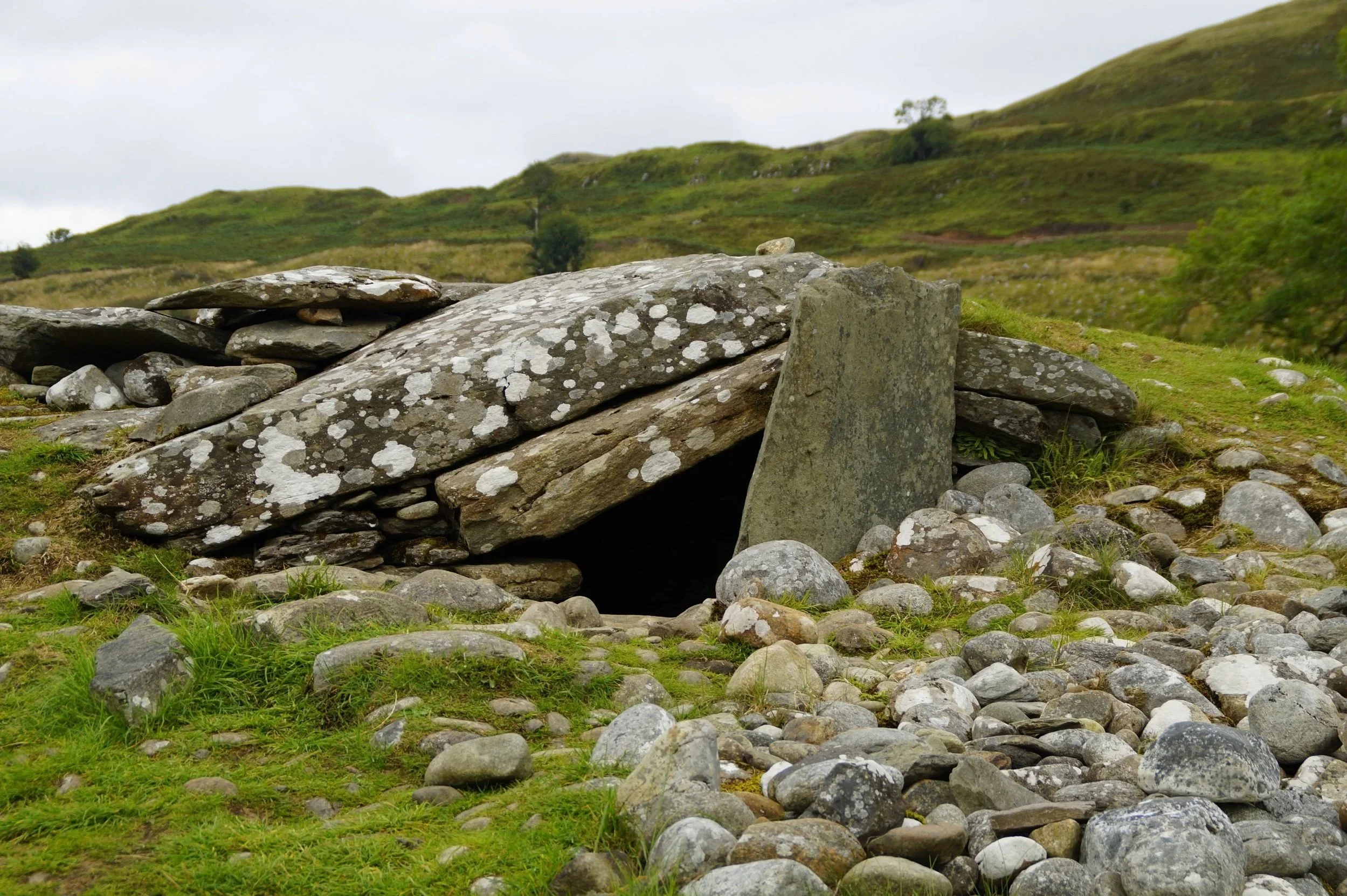
He is greatly disturbed and comes to the cave. And then he gives a command which, if it were not coming from Jesus, would simply be the words of a foolish man overcome by grief. For the tomb has been sealed four days. Lazarus has been in the grave rotting four days. There is a great stench. There is no embalming in these times. And Jesus says, "Take away the stone."
And even then, Martha says, Jesus, I don't think you really want to do that. There's too much death in there. There's too much death and decay in there. We can't bear to see it. We cannot bear to smell it.
And Jesus says, "Did I not tell you that if you believed, you would see the glory of God?" So they took away the stone.
And the Lord Jesus Christ, God's Word made flesh, the Word through whom the universe was created, stands at the entrance to the cave. And He speaks God's Word. And He cries out in a loud voice, "Lazarus, come out!"
And the dead body of Lazarus hears the voice of his Master and obeys. And the breath of life comes back into him. And he stands up.
Not just spiritually, but physically. How do we know that? Because when he walks out of the cave, obeying the voice of his Master Jesus, he's still wrapped in the grave clothes. Still bound up in the items of death. So Jesus says to them, "Unbind him and let him go."
Application to Our Lives
When you have been oppressed by sin, when you feel heavily the weight of death, upon your shoulders, when you feel that you have been trapped in a tomb, and it has been far too long for you, the Lord Jesus Christ commands you, child of God, come out. Come out of that place of death and live.
Trust the Lord Jesus Christ, who has the power over life and death. For where we go to find Jesus' presence with us is not in the highest heights of heaven, but we find Him suffering and dying on a cross.
We are people not of the glory of God, but we are people first and foremost of the cross. For it is the cross that shows us God's message to a dying world. And Jesus enters into that world and dies for it. So that those who trust Him may trust the One who said, "I am the resurrection. And I am the life."
And at the fullness of time, at the end of days, the Lord Jesus will return and when He does, He will call you forth from your grave. With the same cry of command, He will speak above your resting place.
He will command you and say, Child of God, Son of God, Daughter of God, come out, come forth!
And you will hear the voice of your Lord Jesus Christ and you will obey Him and you will rise.
For death will be no obstacle to the glory of God.
May you trust the One who calls you forth from your grave. May you follow and obey the One who loves you and died for you on the cross. May you know the peace and presence of Jesus Christ.
And may the peace of God, which surpasses all understanding, keep your hearts and minds strong in Christ Jesus our Lord to life everlasting. Amen.