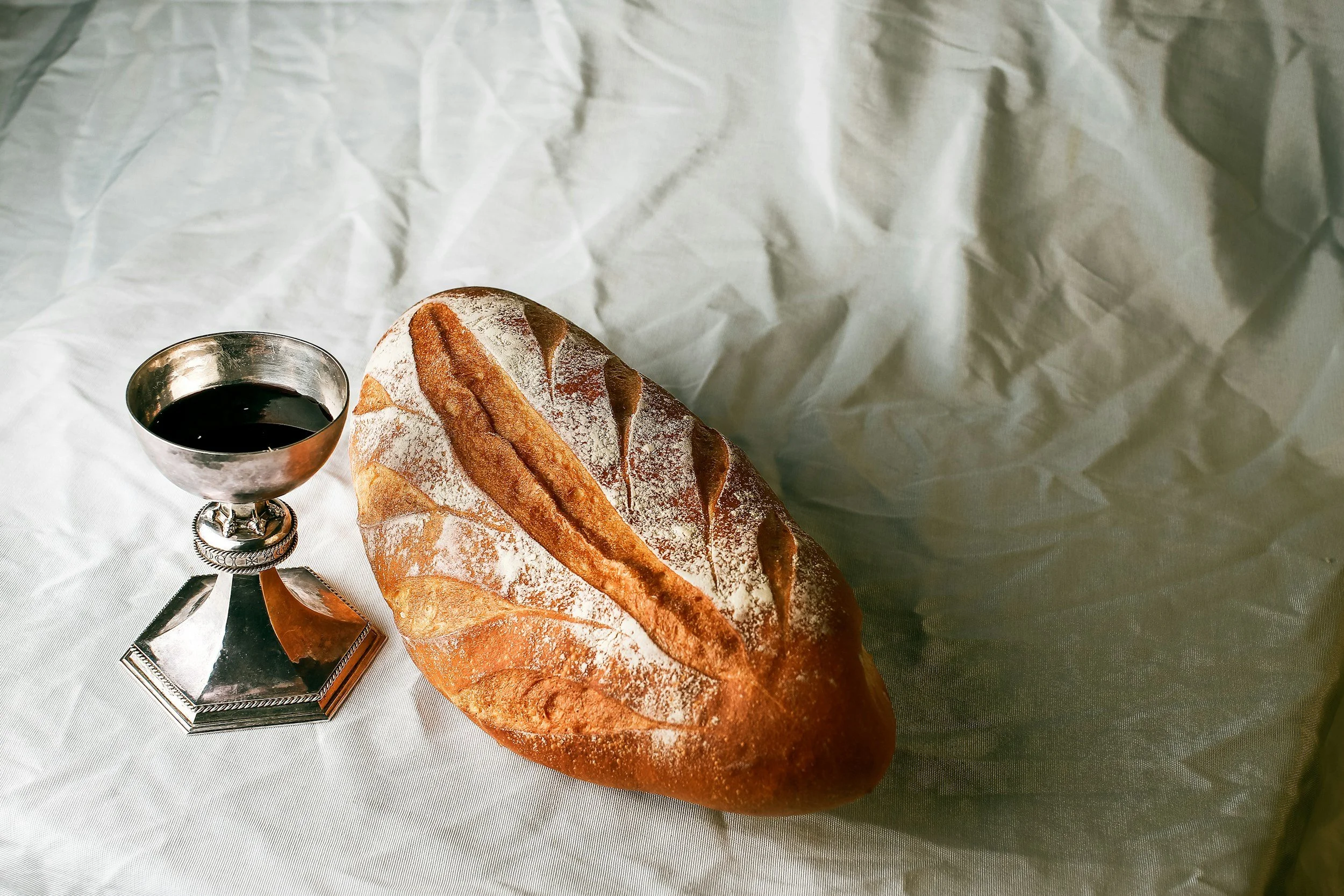
Why Weekly Communion Matters
I was recently asked a question by someone in the community:
Why does your church have Holy Communion weekly? Doesn't that make communion less special?
The Lutheran tradition has always seen Communion as one of the main ways God gives us His grace—His forgiveness, strength, and presence. When we receive the bread and wine, we are not simply remembering Jesus. We are actually receiving His true body and blood for the forgiveness of our sins.
Think of it like food for the body: we know we need regular nourishment, and so we eat regularly to be sustained for the work that God calls us to do. The same is true for our faith. Holy Communion is not just an add-on to our weekly worship, it is the living center of our worship. Going without it for weeks or months leaves us spiritually malnourished.
Martin Luther — the 16th century church reformer from whom Lutheran churches take their name — understood this clearly. He once said:
"For in Confession as in the Lord's Supper you have the additional advantage, that the Word is applied to your person alone. For in preaching it flies out into the whole congregation, and although it strikes you also, yet you are not so sure of it; but here it does not apply to anyone except to you. Ought it not to fill your heart with joy to know a place where God is ready to speak to you personally? Yea, if we had a chance to hear an angel speak we would surely run to the ends of the earth. Are we not then foolish, wretched and ungrateful people not to listen to what is told us?" (Sermon on Confession and the Lord's Supper, 1524)
Luther knew that the benefits are real and personal. The more often we receive what Christ offers there, the more often we hear that our sins are forgiven and that Christ is truly with us.
The reason many American Lutheran churches moved away from weekly Communion has less to do with theology and more to do with history. Early Lutheran settlers often lived far apart with few pastors available. When a pastor could visit only a few times a year, Communion naturally became less frequent. Over time, this practice born of scarcity became normal — and then, by a process I like to call "back-theologizing," it became celebrated. In other words, people concluded that "this is how it has been for us for many years, therefore it must be traditional and good."
But, as Luther writes in the Large Catechism:
"If you could see how many knives, darts, and arrows are every moment aimed at you, you would be glad to come to the Sacrament as often as possible." (LC V.82)
At the same time, many Lutherans wanted to look different from Roman Catholics, who celebrated the Mass more often. In a country with strong anti-Catholic feelings, having Communion less frequently felt like a way to show they were not Catholic.
However, the Augsburg Confession, one of the statements of faith subscribed to by our congregation, has this to say about Communion (also called "the Mass"):
Our people have been unjustly accused of having abolished the Mass. But it is obvious, without boasting, that the Mass is celebrated among us with greater devotion and earnestness than among our opponents. The people are instructed more regularly and with the greatest diligence concerning the holy sacrament, to what purpose it was instituted, and how it is to be used, namely, as a comfort to terrified consciences. In this way, the people are drawn to Communion and to the Mass. At the same time, they are also instructed about other, false teaching concerning the sacrament. Moreover, no noticeable changes have been made in the public celebration of the Mass, except that in certain places German hymns are sung alongside the Latin responses for the instruction and exercise of the people. For after all, all ceremonies should serve the purpose of teaching the people what they need to know about Christ. (AC XXIV.1, emphasis added)
This habit was also shaped by other Protestant groups who taught that making Communion less common made it feel more important. Ironically, most other Protestant churches do not teach the Real Presence of Jesus Christ in the Sacrament. But under their influence, many Lutheran congregations settled into quarterly or monthly Communion as the standard.
In the 1960s, a broader liturgical renewal began to change this picture. Lutheran churches, along with others, started looking again at the practice of the early church and the way the Lutheran confessions describe the Lord’s Supper. They discovered that weekly Communion was not a new or “high-church” idea. It was the normative pattern in most of Christian history and in the Lutheran church in Europe. The renewal movement helped American Lutherans recover something that had been lost more because of circumstances and cultural pressures than because of conviction.
Receiving the Lord’s Supper every Sunday does not make anyone a better Christian. But it does give God more opportunities to strengthen faith, forgive sins, and remind us that Christ is truly present with His people. For a church that values the means of grace, as we do, offering Communion weekly is simply a way of making that gift available as often as possible.