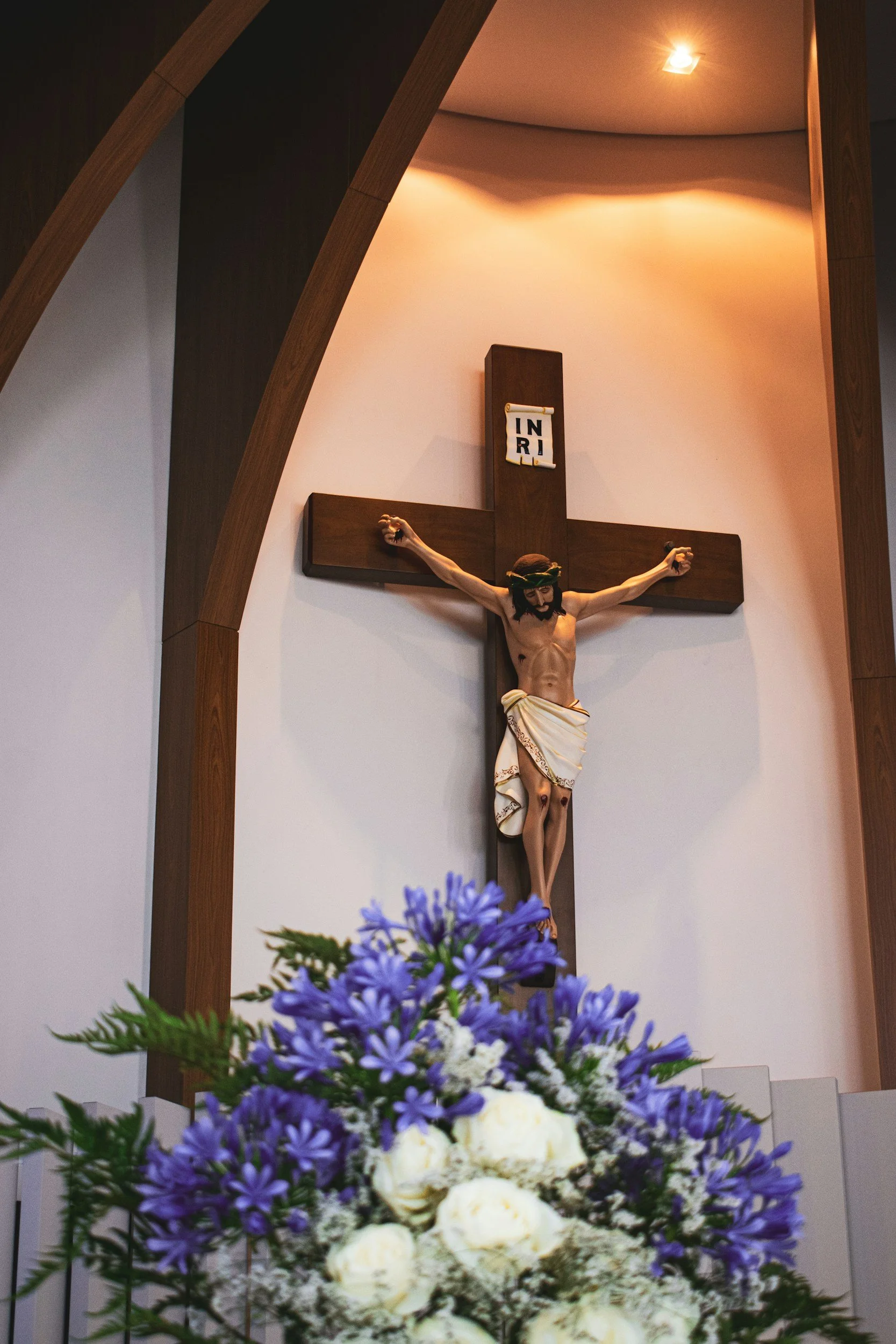
Christ Died for the Ungodly
This sermon was preached by Pastor Ted Carnahan for the Third Sunday after Pentecost on June 14, 2026.
Grace, mercy, and peace be with all of you from God our Father and from our Lord and Savior Jesus the Christ. Amen.
Sometimes we gloss over the need to fear the Lord. The explanation of the first commandment in Luther's Small Catechism says that "we should fear, love, and trust God above all things."
I was in confirmation class with my pastor (who has since gone to glory and did not particularly like kids) who was trying to explain how it was that we should fear, love, and trust God. I remember this because he seemed almost embarrassed by the word "fear." We should not be afraid of God, he would tell us, but rather this is more of a word of respect. We should respect God.
I will have to disagree: The fear of the Lord is the beginning of wisdom. We see an example of that fear applied in a positive way in Exodus chapter 19. In Exodus 19, which Nancy read for us, you have something that I think is rather interesting. God is talking to the people of Israel and he is offering them both a carrot and a stick.
The Carrot and the Stick
The stick is, "You have seen what I have done to the Egyptians." What has God done to the Egyptians? He took all of their slaves away. He took them away by showing his great and magnificent power, which he used in order to send plagues upon the people of Egypt until finally Pharaoh was compelled by the death of all the firstborn males in Egypt to turn loose his people and set them free.
He says to the people of Israel now gathered at the base of Mount Sinai as they are fleeing from the forces of Egypt, "You have seen what I have done to the Egyptians." This is fresh in their minds. They just witnessed the angel of death setting them free. They just witnessed the chariots of Egypt chasing them to the edge of the Red Sea. They witnessed the miracle of God using a strong wind to push back the waters so that they could walk on dry land. They watched as God used that same wind to withdraw his protection from the Egyptians and destroy their army as the waters crashed back.
If you doubt my power, God seems to say here, look at what I did to the Egyptians.
You should pay attention to the justice of God. But in the same sentence he also says, look and see how I have chosen you and how I have given you freedom and salvation. In other words, do not just fear the Lord, but also trust in the love of God, because here God is showing them that he has chosen them. He has pulled them out of slavery and sent them into freedom. He has withdrawn the yoke from their shoulders and given them a new life. In one sentence he says, consider the Egyptians and consider also what I have done for you.
The Covenant and the Golden Calf
He establishes a covenant at the base of the mountain in Exodus 19. "Obey me. Act like this is true. Pay attention to the mutual covenant that I am setting up with you." And then, in Exodus 19, all the people respond as if with one voice: "Everything that the Lord has spoken, we will do." Can you imagine everybody saying that all together? In fact, let us all say it together. "Everything that the Lord has spoken, we will do." A great idea! A wonderful sentiment!
But then, in Exodus 20, Moses then goes up Mount Sinai and the things start to happen that the people down at the base of the mountain do not understand. He is enshrined and enshrouded in cloud. The voice of the Lord seems to speak. There are flashes of lightning. He is up there for a long time. They start to think he is dead. What do they do? They gather all their gold jewelry together and they melt it down and they make for themselves a golden calf. They make an idol for themselves.
So much for "Everything that the Lord has spoken, we will do." As soon as Moses' back is turned, they immediately turn to idolatry.
God cannot be for us hypothetical. We should not merely live as though there is a God in heaven, but rather we should firmly trust and believe that there is a God in heaven. He knows us better than we know ourselves. Which means that he knows all the good. He knows every good deed you have ever done. He has seen all of the kindnesses that you have done that no one else has noticed. He has seen all of the ways that you have sacrificed for the sake of the love of God and neighbor. He knows all of these good things. But he also sees everything that you do in the darkness.
Hiding from God
Frankly, it is absurd, but we try to hide from God the things we do in the darkness all the time. Just like when Moses comes down the mountain and he confronts his brother Aaron and says, "Aaron, what is going on with the big golden calf?" The response is, "Oh golly gee, Moses, we just accidentally tripped and threw a bunch of gold in the fire and out popped this calf." Likely story! Moses could see past that.
Reminds me of an old joke:
A husband came home late one night after more than a few too many drinks. He snuck quietly up the stairs trying not to wake his sleeping wife. He crept into the bedroom, flicked on the light in the bathroom, and began frantically bandaging the various bumps and bruises that he had acquired from a bar fight earlier that evening. Once he had satisfactorily covered over the bumps and bruises, he climbed into bed and smiled to himself in the darkness, patting himself on the back, completely convinced that he had pulled the wool over his wife's eyes and successfully hidden his late-night misbehavior. When morning came, he woke up to find his wife standing over him, hands on her hips. "You were drunk last night, weren't you?" she demanded. "No, honey, I wasn't," the husband denied. She glared at him and said, "Then explain why there are twelve Band-Aids stuck to the bathroom mirror!"
The things that we do to hide our sin, God sees right through. In fact, consider this: Jesus welcomed among his first twelve apostles Judas Iscariot, knowing full well that he would eventually betray him. It was all known by Christ in advance. He was aware of the sin already brewing in Judas' heart. He knew that Judas was a thief and had been stealing from their common purse. Yet he still saw fit to use him to advance the kingdom of God.
Christ Died for Sinners
Therefore, when God looks at us, he does not see good people who have made a few oopsie-daisies, which would come as a surprise even to God himself. He sees sinners. If you have any doubt of that, you need simply to look in the mirror. Or as Martin Luther put it, if you ever doubt that you are in need of a Savior, first, simply stick your hand into your shirt and feel that you do indeed have flesh and blood. Feel the heartbeat and know that as a living person, you do need a Savior because you are a sinner.
But here is the amazing thing: Knowing full well that you are a sinner, knowing the darkness of your lives that you are unwilling to admit to yourselves, knowing you better than you know your own self, Christ still died for you.
Not for a good person. Not for a better version of the person that you are. Not for the person that you will become someday. But for an ungodly man or woman. For you.
St. Paul here is reminding us that "while we were still sinners, Christ died for us." When we were enemies of God, objects of his wrath on account of our sin, he still sent his Son to be born among us, to live among us, to suffer for us, to die on the cross and rise from the dead. Through the one man Adam sin came into the world, so now salvation has come for you through the new Adam, our Lord Jesus Christ.
"For You"
In fact, Luther reminds us that the two most important words that you must keep in mind as you come to Holy Communion are the simplest words that we have: "For you." If you have faith that this is for you, for the forgiveness of your sins, then come to the table and receive the salvation of God.
Now may you trust this God who knows you better than you know yourself, the love of God who calls you to live for him, the one who gave himself for you. And may the peace of God which surpasses all understanding keep your hearts and minds strong in Christ Jesus our Lord to life everlasting. Amen.