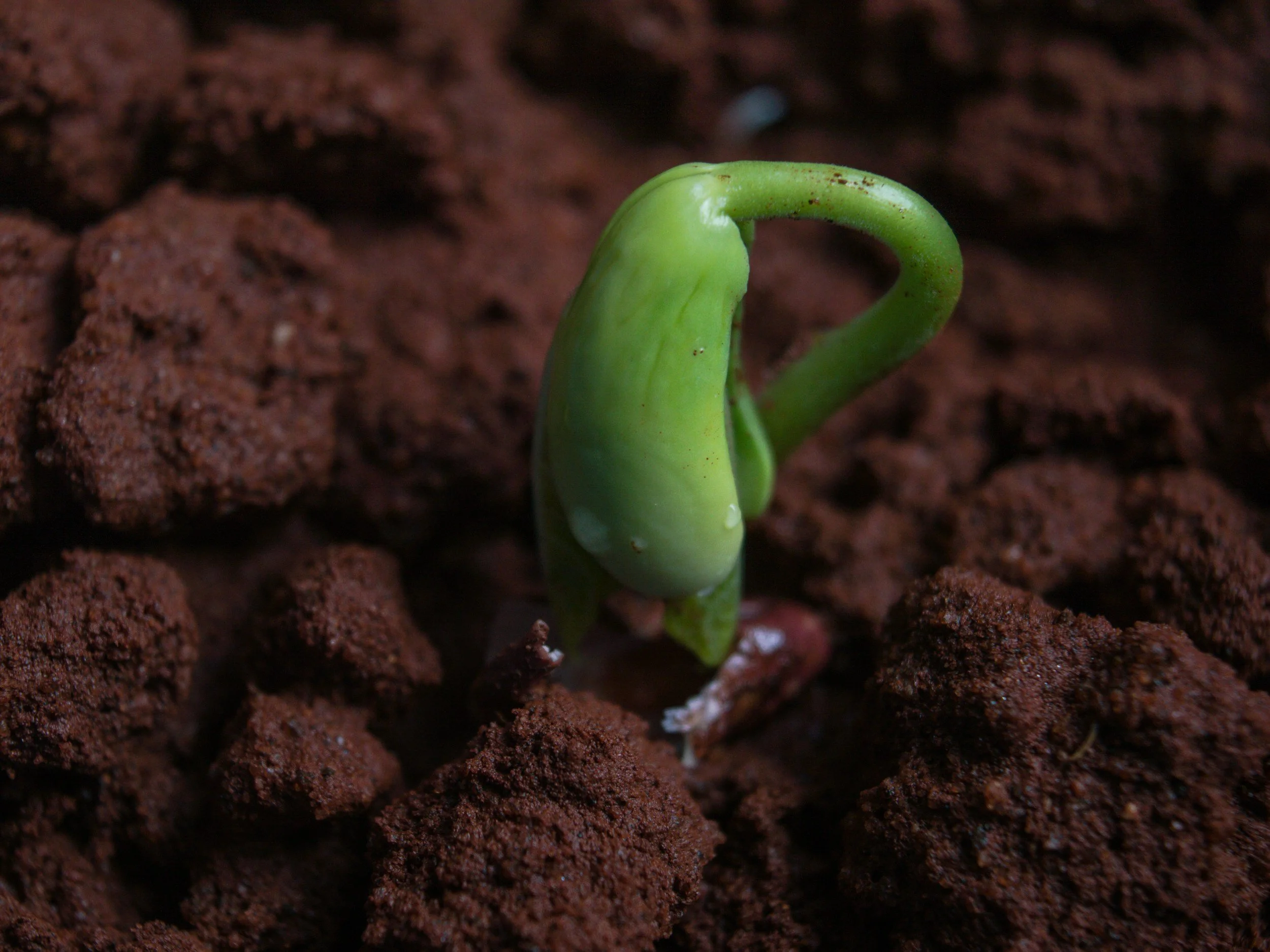
The Good Farmer
This sermon was preached by Pastor Ted Carnahan for the Seventh Sunday after Pentecost on July 12, 2026.
Grace, mercy, and peace be with all of you from God our Father and from our Lord and Savior Jesus Christ. Amen.
I'll be the first to admit to you that I didn't grow up around agriculture. I am a city kid, but I find it very interesting. Every time I get an opportunity to ride a tractor or a combine, I'm always amazed at the level of sophistication that goes into it. The era of precision agriculture, where every variable is tracked from planting time onward, the quality of the soil, the seed type, exactly the depth, all the things that go into that. And of course, then at the harvest, they've got the computer on the combine that's telling them in real time exactly how many bushels per acre they're getting. And they can track it and they get a map that shows in color codes the best parts of the field and the parts of the field that are struggling. I think that is fascinating. Some of it is just because I'm a computer geek and some of it is because I just think it's amazing what technology is able to do.
A Different Kind of Planting
But here today in our gospel reading, Jesus talks about a very different kind of planting, not precision agriculture, putting one seed in one hole in one place at a time and tracking it all very carefully, but an entirely opposite way of planting.
A sower goes out to sow, and as he does, he begins to scatter the seed with abandon. He throws it all over the place. The seed is valuable, but this sower is scattering seed in places that any farmer worth his salt would recognize as bad places to plant. He scatters it on the path, where he knows that people are going to trample it underfoot, where the ground has been hardened by the passage of people and animals. He puts it on rocky ground, where he knows that it's not going to grow. This sower is not a dumb person. He knows that there are some places in the field that are better than others. But he throws some of it in the thorn bushes! (What's that all about? That's a dumb place to put seeds!) But he also scatters much of it on good soil.
Why would this sower, who goes out to sow, plant in places that don't seem to be very fruitful? Because this sower is more than just a farmer looking to turn a profit. This farmer loves all of the soil. He gives the soil an opportunity to produce. Rather than imagining what the likely outcome is, he simply scatters the seed to the four corners of his field and waits to see what the result will be.
The True Point of Church
Sometimes it's easy for us to miss the point of church. Why do we do this? Why do we gather on a regular basis to do this? We can spend our attention on plenty of things that are secondary, and the church is full of good things. They're not bad things, but things that are secondary. The social opportunity of talking to friends. Enjoying a cup of Lutheran coffee, the busyness of congregational life. These things are positive things, but they're not the most important thing.
The most important thing is that we have been adopted into a family. This is the family gathering, the weekly family reunion where we get together to support one another and find out what's happened in the week and care for each other. We've been adopted into a family of faith. We gather weekly in the love of Jesus Christ, in worship, that love which claims us all is announced to us again and again. We have to keep the first thing first.
The purpose of worship is not merely so that we can come and bring our gratitude and love to God, but actually, probably most of all, even more importantly than our coming to God, is God coming to us. That he can do for us all that he intends to do with his word, and he does so through his means of grace:
- the Word of God read aloud,
- the spoken Word of God preached,
- and the effective sacraments, the word of God made tangible, the water of holy baptism, and the word of God received in our hearts as we receive Jesus Christ at the altar.
The Promise of God's Word
Here in Isaiah chapter 55 in today's readings, we see a tremendous promise. His word always accomplishes the thing that God intends for it to do. God doesn't just send the word out and hope that it works out, but he knows that it will accomplish his purpose. One way or the other, it does not return to God empty and void. It's sent out from God and it will accomplish God's will.
Consequently, just as rain waters the earth to bring growth, so we too must be watered in order that we might grow in faith. That's when we come to worship. We celebrate, we worship, we give our gratitude and thanks to God, but we do so because God is doing his word to us.
But if only it were so simple. It's easy for us to look around and see (or rather not see) many people who have been among us to hear God's Word in the past and no longer make his Word a priority in their lives. What can we say about that? This same word of God, which is read and proclaimed and poured upon our heads and fed to us in Holy Communion, it falls on each recipient, but just like there are many kinds of farm ground, some which produces enormous yield and others which are poorly drained and barely survive the pouring rains, there are different people who hear the Word of God. Jesus gives us in his parable, not simply the parable, but also his explanation.
Different Kinds of Soil
Sometimes the word of God is sown upon the hard ground of the path. And it's not understood because the evil one comes and snatches away what was sown. These are those who are unwilling to allow the word of God to sink deeply into their lives.
And sometimes the word falls upon rocky ground, and when trouble or persecution comes on account of that word, they fall away. These are the fair weather fans of Jesus Christ, those who are excited to be part of the worship of God when things are positive and feel uplifting, but when they are convicting and calling us to repent, they're not interested.
Sometimes the Word falls upon thorns and worldly cares and the lure of wealth choke the Word. These are the ones who would follow Jesus if he wouldn't actually ask them to do anything or change anything about their lives.
Do we imagine that God is unaware of our faithlessness? Is God blind to our unwillingness to put Christ first in daily life and family life?
And while we won't all bear the same amount of fruit, God desires growth in your life.
Fields Do Not Tend Themselves
Now I've never been in a farm field that tills itself. I've never been in a farm field that plants itself. And goodness knows I've never been in a farm field that harvests itself. (If you ever find such a thing, please let me know because if you happen across something, you're going to be a millionaire many times over.)
But instead, it takes a planter to sow seed. It takes a combine to harvest a crop. It takes people who are dedicated to the land and who do that year in and year out, who love the land and manage it and steward it. And the farmers who do that year in and year out love the land and they know that they've been given it to be a good manager. In the same way, God loves you and God desires a growth in grace among you.
And moreover, God has sent his own Son, Jesus Christ, to plant his word in you. Therefore, when we face worldly trials and temptations, we should strive to trust God's promises because while sometimes all of us fall into any of those categories, sometimes our hearts are hard or stony or mired in the thorns of worldly cares and the lure of wealth and our own sense of prosperity, we have a Good Farmer. Can we call God that? Can we go beyond saying that Jesus is the Good Shepherd? Can we call him the Good Farmer too?
We have a Good Farmer who loves us and desires a harvest from us, a harvest not just of grain, but the true food that endures to eternal life, a harvest not born of our effort, but of the work of God among us.
We must not resist his work among us with his word, nor should we be often absent from his ministry among us. And when we cry out to God, "Abba Father," we know and we have received the promise that the Spirit will intercede for us with sighs too deep for words. When we face those troubles in this life, we know that the Spirit of God will hear us and help us.
The Good Farmer at Work
God is working miracles among us by converting our hearts, loosening the soil of our hard hearts, picking rocks until the field will yield, eradicating the thorns that choke us. And at the last, all ground will be rendered fertile and all of the things that keep us from the love of God will be removed. This is God's good work among us.
This is our Christian hope, not that we have made ourselves good soil, but that the Good Farmer is doing his work among us. That even as we groan in the struggle against sin in this life, we can trust that the Good Farmer is at work. And at the last day, we can be confident because of the work that God has done here among us, that we will be among the first fruits of a new and restored creation. And therefore, we can trust this God, and we can have this ultimate hope.
May you trust the Good Farmer who loves you, cares for you, tends you, and yes, tills you. And may the peace of God, which surpasses all understanding, keep your hearts and minds strong in Christ Jesus our Lord to life everlasting. Amen.