
“Grace, mercy, and peace be with all of you from God our Father, and from our Lord and Savior Jesus Christ. Amen.”
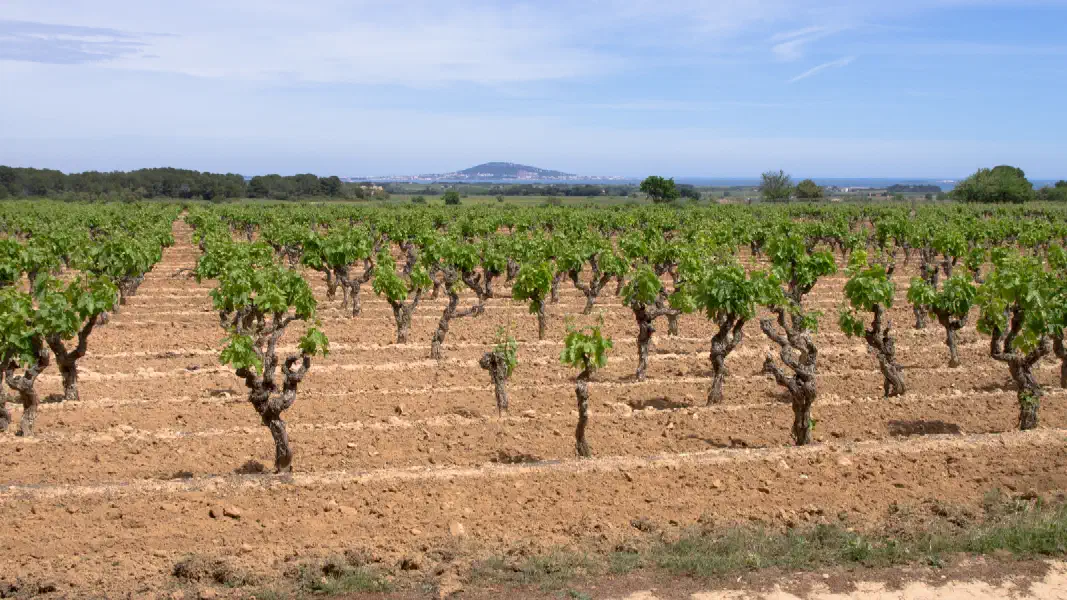
The prophet Isaiah tells us a sort of parable of a pleasant vineyard. It’s an amazing vineyard because it’s not just a vineyard that is constructed by human imagination and skill, but a vineyard which has been constructed by God Himself.
God built this vineyard and He appreciates the vineyard that He’s constructed so much that He doesn’t just say, “Well, I like this vineyard,” or, “I think this is a really great vineyard,” or, “It’s an incredibly productive vineyard.” He says, “This is His beloved vineyard.” And it’s on a very fertile hill, sunny at the right times and shady at the right times. It’s well located.
He went over the soil carefully and He removed all the stones and rocks that might inhibit the growth. And then He planted it with vines, but not just any vines, with choice vines. He went through and hand-selected each one to say, “Only the best of the vines that I can find that will grow in My garden are going to be planted here. I’m going to choose the best vines I can, and I’m going to tend each one with loving care.” And He even builds a wine press and a wall around it, even a watchtower perhaps.
But instead of good grapes for making really good wine, instead He got wild grapes. I don’t actually think that the word “wild” in our translation today does this word justice. The word that’s translated “wild grapes” could also be called stinking grapes, noxious weeds, worthless things, or perhaps most on point, the stench of corpses. After God intended to produce the perfect vineyard, the iconic example, the Platonic ideal of a perfect vineyard, producing perfect grapes in order to create the best kind of wine, instead He got only the stench of death.
And so in the prophet Isaiah, God turns and the story changes. And He says to Israel, “Judge between Me and My vineyard.” Now we find ourselves in a courtroom, and God is the plaintiff and the defendant is the people of Israel. And He charges them this way. He says, “What more could I have done for you? Since this vineyard will not bear good fruit, I will remove its protective hedges and wall, and it will be trampled and overgrown. The vineyard is the house of Israel. The men of Judah are the vines.”
And then He says something very poetic at the end of this oracle recorded in the prophet Isaiah. He says, “Instead of justice he got bloodshed, instead of righteousness he got outcry.” And I think this is a beautiful thing. It’s actually even more beautiful in the Hebrew.
I know I don’t like to do Hebrew lessons in church so much because you all don’t want to. They say that your biblical Hebrew and Greek, they say this to pastors, is sort of like underwear. Everybody assumes you’ve got it and nobody wants to see it. But I think this is instructive. I think it’s worth paying attention to, because the words here are interesting. Instead of mishpat, justice, he got mishpach, which is bloodshed. Instead of tzedaqah, righteousness, he got tze’aqah, outcry. You hear how similar those words are? They’re just one letter and one vowel dot apart from each other. Yet it shows you how close righteousness and unrighteousness can be.
And it’s true that justice and righteousness are corrupted by small changes. Consider an ordinance that says, and this isn’t about our county, but just as an example, that if the county damages the plumbing going into your house for your septic system, the ordinance says that the county shall fix a failing septic system. That would be a promise, right? It must happen. It shall happen. It is not just supposed to happen, but it will happen. And if it doesn’t, you’ve got a reason to go to court.
But if you change just that one word from “shall” to “may,” now it’s just a pious intention. It’s a favor that the county could decline. It’s the same sentence, the same budget, the same family. One word changes, and now a promise becomes a request.
Righteousness is like that. The evil one does not come to us and offer us something which is truly evil. he doesn’t show up in red spandex with pointy horns and a tail and try to tempt us that way: “Come with me, I’m evil, it’ll be fun.” The evil one takes what is good and corrupts it by the smallest imaginable measure. Just the tiniest little change can turn righteousness to bloodshed.
The image that we have of this vineyard continues in the psalm. Now we see the vineyard with the wall, and the wall has been broken down by God. Its fruit has been plucked by passersby. There’s no wall to guard it, so as people walk along the road they feel free to reach out and grab some and take it with them, and they eat it. They do not care. Wild animals, the boars of the forest, come to ravage it, and there is no protection now for this vineyard whose hedges and walls have been destroyed. The judgment of God has been poured out on the outcry and the bloodshed of Israel. And there is a plea at the end of the psalm: “Turn now, O God of hosts. Behold and tend to this vine. Preserve what Your right hand has planted.”
So then, when we come to Jesus’ parable today in Matthew’s Gospel, chapter 21, we’re talking not about some generic vineyard that Jesus dreamed up out of His imagination. We’re talking about the same vineyard as the prophet Isaiah was speaking of in chapter 5 of his book. It’s the same vineyard with the same care. He plants it and puts a fence around it. He digs up the stones. He digs a wine press. He builds a watchtower. He does all the things.
The crowd immediately understands, especially because these are educated men that He’s speaking to. He’s speaking to the chief priests and the scribes. They know their scriptures inside and out. Many of them would have memorized large chunks of it. So they know exactly what Jesus is talking about here, serving as a rabbi to them, preaching to these supposed keepers of the law.
He says there’s one new detail though: that the owner of the vineyard has decided to go away on a journey, and so he leases out his vineyard to tenants, and the pay that he will receive is a portion of the produce. And so the landowner, at the time of harvest, sends his servants to the tenants to collect the produce which he is owed. It is his land, and they have an agreement.
First he sends slaves, three of them. The tenants see them. They beat up one, they kill a second, and a third is stoned within an inch of his life. Amazingly, the owner of the land sends yet more slaves, and the tenants do to them exactly as they did to the first group, beating some, killing some, stoning others.
And so the landowner then in this parable says, “Ah, I understand. It is them not understanding that this is a true representative of my ownership. I will send my son. They will respect my son.” And so he sends his son to them, and they realize that if they can kill the son, they can seize the inheritance, and the landowner will be powerless to stop them. They will own the vineyard. It will belong to them. They see him coming and say, “Let’s kill him and get his inheritance.” And so they throw him out of the vineyard, and then outside the gate they kill him.
The landowner has been patient with them. He sent slaves, and then yet more slaves, probably more patient than I would have been if they had beaten up my servants the way that his servants were mistreated. And then sending his own son, pleading with them to offer the fruit which is part of this covenant, this contract that they have entered into, to repent, to come to their senses, to turn and give him the fruit which is due.
Then Jesus turns to those who are listening to His story and asks them the key question: what will the owner do when he returns to his vineyard? And they give the right answer. “He will put those wretches to a miserable death and lease the vineyard to other tenants who will give him the produce at the harvest time.” Out of their own mouths comes the sentence in the courtroom. These men who are killing in order to steal the vineyard deserve death. And then Matthew says they realized that Jesus was talking about them.
Jesus then turns the story and He says, “Have you never read in the scriptures, ‘The stone that the builders rejected has become the cornerstone; this was the Lord’s doing, and it is amazing in our eyes’?” The stone the builders threw away is now the one upon which all other stones must be measured and judged.
Think of what a cornerstone does, especially not in the modern era. In the modern era we put cornerstones in buildings, not because we need them but because they mean something old and with steady history and with something that is important. It has gravitas. We had a cornerstone laid in this church building. It is right outside in the bell tower area, and if that cornerstone wasn’t there the builders would have been fine. They would have been able to build that tower with no problem. This building doesn’t need a cornerstone. We have modern surveying tools. We have snap lines and all the levels and all the things that they use today to keep a building square, plumb, and true.
But in ancient times the cornerstone was the most important stone, because you measured everything off of that. Lay it a little bit askance, and suddenly your floor has a roll to it. Lay it a little crooked, and suddenly your walls don’t meet up at 90-degree angles. If that stone is not perfectly square, you could end up with a trapezoid for a house. And so this stone which the builders have rejected, the builders being the chief priests and the scribes of Israel, has now become the very head of the corner. It is the chief cornerstone, the stone by which everything stable, worthwhile, and lasting must be aligned. The vineyard is handed on. Other tenants will give the owner its fruit, but only the chief cornerstone can make things right.
It’s really tempting for us to point and say, “Well, I would never do what they did.” But you are the ones who do what those tenants do by not giving righteousness to God. You are the tenants, and I am the tenant. We cannot manufacture the fruit of righteousness any better than they could. And if we try to possess the vineyard of our own power, we will simply earn for ourselves a miserable death, a sentence that we pronounce upon ourselves, because like the Pharisees and the scribes and the chief priests hearing the story of these tenants, we know exactly what is deserved by those who reject the owner.
And yet God continues sending His servants the prophets, and God finally in the fullness of time sent His own Son with infinite patience to win us back. The one who produces the fruit is the vine Himself. Our hymn of the day will tell us that in God’s garden there will hang a tree upon which we kill the author of life, saying, “Our greed has starved it, our despite has choked it.” Look, it lives!
Saint Paul arrives at the same conclusion from the other direction. Paul was seeking his own righteousness and working hard to find it. Paul tried to be a vineyard that produced its own fruit, and he tried to be blameless under the law. Paul had the resume to claim that, to declare himself righteous. Did you hear his resume? Paul said, “I am a Pharisee among Pharisees. I was strict, I was devoted, I was educated, I was committed.” And yet at the end of all of this, he realizes that all the things that he had done to produce the fruit of righteousness in his own life, he regards them as the worst kind of rubbish, because he found that the righteousness he was reaching for had been given to him all along. Paul found righteousness in Jesus Christ. Paul says, “Not having a righteousness of my own that comes from the law, but one that comes through faith in Christ.”
God comes to you today persistently, giving you His righteousness, intending for you by faith to have all that He has won for you upon His cross, your sins forgiven and blotted out as far as the east is from the west. He gives you His own righteousness, sends you His prophets, and finally sends you His own Son, that you might cling to Him and live, producing the fruit of the kingdom by trusting the one vine from which it springs. May you trust this vine with all your heart and mind and soul and strength. May you love your neighbor as yourself, and may the peace of God, which surpasses all understanding, keep your hearts and minds strong in Christ Jesus our Lord, to life everlasting. Amen.