
“Grace, mercy, and peace be with all of you from God our Father, and from our Lord and Savior Jesus Christ. Amen.”
When you get an invitation to a party, how quickly do you respond? Do you RSVP? Now, I never took French. In fact, I had to look up what RSVP stood for, and I am glad I did, because I thought I knew what it stood for in French and I was wrong. It stands for repondez s’il vous plait. Respond if you please. It is a request to get back to me and let me know whether you are coming or not. And sometimes you do not have to say that you are not coming, but you definitely have to say if you are coming, because ultimately it is important for planning the party to know who is going to be a guest at the banquet.
So when you get an invitation like that, what do you do? Do you immediately and joyfully get your phone out and look at your calendar? Or do you take it and set it aside carefully to ask your spouse about it later? Do you immediately call or text your yes or your no? Sometimes the really fancy wedding invitations have the card in there with the envelope and the stamp and everything, and you can fill that out and check the box and send it back. Or do you do what I do sometimes, and you set it down meaning to think about whether you can make it or not, and then you set it over on the mantle, and then you walk away, and then three weeks later you still have not done anything with it.
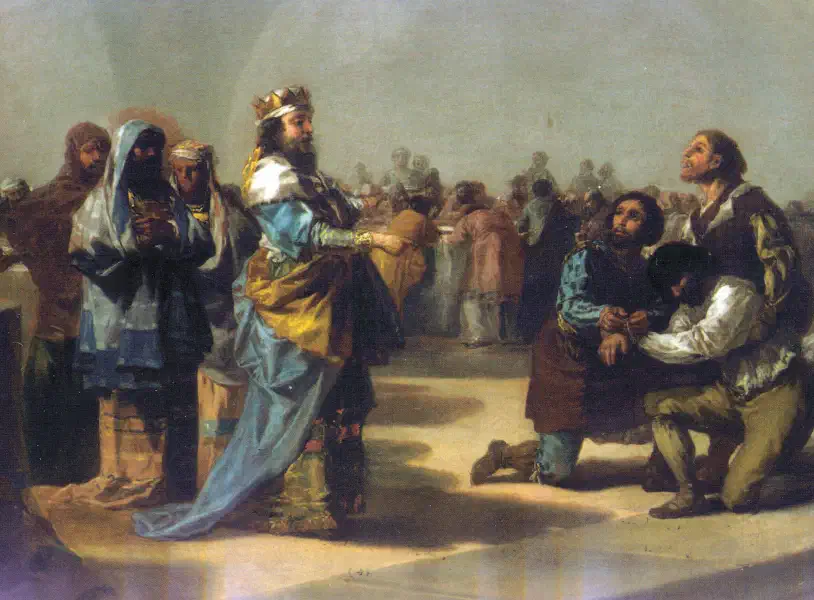
Today’s story is about a wedding invitation that got set aside and forgotten about. But not just a wedding invitation from a family friend or somebody close to you. This is a wedding invitation from the king. And he has already assumed that you are coming. After all, who would miss out on the party of the year, a wedding banquet thrown in the palace for all of these guests, with you on the special invitation list? He has already prepared his dinner. He says, “My oxen and my fat calves have been slaughtered, and everything is ready.” The bill has been paid. But the guests are missing.
And then the king naturally wants to know, what gives? Why have I not gotten a response? Why are not people arriving at the banquet? Where is everybody? So he sends out slaves to inquire of those who have been invited what is going on, because when they got the invitation, what they did was shocking, but actually very boring. They simply got the invitation and did nothing about it at all. They neglected it. It was not worth their time and attention. And here is the remarkable thing about this story. Nobody in it is seizing prophets and killing them. Nobody is plotting, like last week, to steal an inheritance. In last week’s parable the tenants in the vineyard beat and killed the slaves who were sent to them, and finally they killed the son. But in this story, nobody is beating anybody up. They just do not care very much.
They say, “Well, I have got work to do. I have a farm, I have a business. It is Tuesday.” Big shrug. They just do not want to come. And so the feast is ready, but the guests never arrive. The invitation of our God comes to each one of us too, and we find other things to be of greater value. And the king’s response to them in the parable is harsh. He destroys those people, he burns their cities. You find that you have not just skipped an invitation to a party. You have insulted the king’s honor, and he reacts in an extreme way.
People of God, is it too much for us now to say that we treat the things of God too lightly? Perhaps we come to church, but not so regularly. Perhaps we bring our children to the font and then neglect to teach them the faith in the home. Perhaps we live our lives with higher priorities for our time and treasure. It is not that the things of God are rejected utterly. It is not a rebellion or an uprising against the king’s authority in the parable either. It is just secondary. It is just not quite as important.
In the story that Jesus tells, those who treat God’s calling as unimportant are destroyed. And God instead welcomes more guests. He gives his servants this instruction, “Go therefore into the main streets, and invite everyone you find.” And so Matthew tells us that they go, and they begin inviting anybody they can get their hands on. The feast is already made. The oxen have been slaughtered, the fatted calves have been made into delicious veal. We are about to have ourselves an amazing feast. The food is already prepared. And so they go out to gather in anybody who will respond to the invitation, both good and bad. Note here that they do not get choosy at this point. Their whole objective is to fill the hall. And so they go out and they try to recruit as many people as they can, gathering them into the wedding banquet, inviting them to come, and telling them that this is a wedding banquet. It is time to show up. And they are successful. Now the hall has filled up. Now there are people seated at every chair, at every table, and the king is pleased, because he looks out over the crowd that is gathered there.
And even though it is filled, the hall is filled now with ordinary people. Not the nobility, not the wealthy aristocrats, not the people who have the wealth and power in his society. It is just ordinary people. Even some, in some cases, the wrong kind of people, which is to say people like you and me, who were not on the original guest list, but now we are welcomed. Here and now all of us are welcomed into the hall. We are all here together. So far, so good. But that is not the end of the parable, is it?
The king enters the hall. He looks at his guests and he singles out one man, noticing his clothes. And he says to him, “Friend, how did you get in here without a wedding robe?” And his response is our translation from the Bible here. Sometimes, just as an aside, sometimes our Bible translators are entirely too genteel about the Bible. This is a great example, because it says he was speechless, but I like it a little more literally. He was muzzled. It was like somebody gagged him. He could not say a word. He was unable to respond.
This man, whoever he was, came wearing his own clothes, bringing his own resume, bringing his own righteousness. Remember last week, when St. Paul shared his resume of righteousness with us? Talking about how he was a Hebrew among Hebrews, that he was circumcised on the eighth day, that he was educated to the nth degree, that he was even a Pharisee among Pharisees. He was just that amazing of a guy. So disciplined, so direct, so well educated, so well versed in the law. He was a young rising star. And then, after listing all the ways that he is a more righteous person than you are, and than I am, he says this. It is all rubbish. I regard it as the worst kind of filth, and it means nothing to him compared to the surpassing worth of knowing Jesus Christ as Savior and Lord.
People of God, you are not welcome in the wedding feast of God with just your own righteousness to wear. It is just not good enough. Your street clothes will not do it. The things that you have cobbled together on your own to make yourself righteous before God just make you an excellent Pharisee, like St. Paul. It might seem to you new and clean and bright. You might think of yourself as quite the shiny penny. You might even be patting yourself on the back, thinking God has got to be so very proud to have such a devoted and devout follower as me. But the King can see you more clearly than you can see yourself, and he can clearly see that that is not the right kind of robe.
You must be clothed in a different sort of way, a different sort of righteousness, one that you cannot make for yourself but can only receive as a gift. And you were dressed for the feast. You were dressed at the baptismal font, dressed for the banquet, washed by water and the word in the name of the Father, and of the Son, and of the Holy Spirit. Those are clothes that you were given, not that you made or earned. So the question really is, which ones did you show up to the banquet wearing?
If you wear the robes you were given in holy baptism, you belong. The robes mark you out as belonging to the family of the King. They are the robes of Christ’s righteousness. We put them on around us, and we shield ourselves from the judgment of God through the obedience of Jesus Christ and his sacrificial death on the cross. He has given you the pure white robes of his righteousness. He has prepared for you that which you must have in order to enter into the wedding feast of the Lamb of God. They are the robes of victory, because they are vindicated in the resurrection to eternal life, first of Jesus himself, and then for all of us who call upon his name.
But if you show up in robes of your own creation, robes of your own righteousness, you will be ejected from the party. And there will follow for you weeping and gnashing of teeth. For a long time I did not know what gnashing of teeth was. I thought weeping and gnashing of teeth were two different ways of saying crying. I guess I just did not know. The gnashing of teeth is like when you are gritting your teeth and growling. It is anger, not just sadness. Here Christ teaches us the deep sorrow and anger of those excluded from the kingdom of God, because they relied upon their own righteousness instead of that of Christ. And if you find yourself in the outer darkness, you will imagine that God has wronged you severely because you were not welcomed, and you will gnash your teeth at him to no effect.
Because God has prepared a feast for those who have the righteousness of Christ. The prophet Isaiah tells us in our reading today that God gives a feast for us to eat, and that in this feast, which we will devour, God himself swallows up and devours death forever. And Psalm 23 tells us that God spreads a table before us in the presence of those who trouble us. So that we, like St. Paul, can find joy in this life. It is not that those who trouble us are taken away. It is not that somehow we have learned to earn our own righteousness or to be good, but that we can rejoice in any situation. And St. Paul says, “Rejoice in the Lord always.” And again I say to you, rejoice, you are welcome at the feast by the righteousness of Christ, which is yours by faith.
And in the meantime, the foretaste of the kingdom is here upon the altar. Bread and wine, as Christ gives us as our feast this morning, his very body and blood. He gives it to you as true food and true drink, as he says in John 6. He provides you with his own righteousness in bread and wine. Therefore, people of God, taste and see that the Lord is not just good, but is goodness itself. Come to the banquet, receive the Lord and live. In Jesus’ name, amen.